.webp?Status=Master&sfvrsn=4df45337_4)

.png?Status=Master&sfvrsn=4c04cf13_1)
.png?Status=Master&sfvrsn=d5947d95_1)
.png?Status=Master&sfvrsn=2b1efdd1_1)
Are you wondering whether cellular shades provide enough privacy at night? This question matters when you're weighing the benefits of filtered natural light against your need for evening seclusion.
Light filtering cellular shades excel during daylight hours, creating a warm glow while blocking direct views into your home. At night, the situation shifts. When interior lights are on, these shades may allow faint silhouettes or shadows to appear from outside. The good news is that these shades prevent people from seeing specific details like your outfit or what's playing on your TV.
Your privacy expectations guide the right choice. Cellular shades offer different levels of nighttime coverage depending on fabric density and construction. If strong evening privacy is your priority, blackout cellular shades deliver more dependable protection, reducing even vague outlines when you're near windows with lights on.
Understanding how these shades actually perform after dark helps you select the right option for each room's specific needs and your family's comfort level.
Key Takeaways
Understanding cellular shade privacy helps you make informed decisions for each room in your home, balancing natural light with personal security needs.
• Light filtering cellular shades provide excellent daytime privacy but may show silhouettes at night when interior lights are on
• Blackout cellular shades offer superior nighttime privacy compared to other options, making them ideal for bedrooms and street-facing windows
• Test privacy levels by standing outside during the day with shades closed. If you can make out shapes, you can expect similar or slightly more visible silhouettes at night with interior lights on.
• Double cell construction and darker fabric colors enhance privacy while maintaining the energy efficiency benefits of cellular design
• Room function determines shade choice: light filtering works well for living areas, while blackout suits bedrooms and media rooms
The key is matching your shade's opacity level to each room's specific privacy requirements rather than using a one-size-fits-all approach throughout your home.
What are Light Filtering Cellular Shades?
Cellular shades get their name from the distinctive honeycomb (cellular) structure that creates air pockets between your window and room. This design offers homeowners a practical solution for managing natural light while maintaining daytime privacy.
How They Work
The honeycomb construction traps air within individual cells, creating a barrier that reduces heat transfer through windows. This makes cellular shades exceptionally energy efficient compared to standard window treatments. The semi-transparent fabric diffuses incoming sunlight, softening harsh brightness while preserving the warm, welcoming feel of natural light throughout your space.
Difference from Sheer and Blackout Shades
Cellular shades fall between sheer and blackout options in terms of light transmission and privacy.
Privacy spectrum: sheer → light filtering → room darkening → blackout.
As you move right, you get less visible light and stronger nighttime privacy. Sheer cellular shades maximize light while offering minimal privacy protection. Blackout cellular shades use dense, opaque materials to block nearly all light and provide strong privacy coverage. Light filtering varieties balance these extremes; they deliver comfortable daytime privacy while allowing gentle illumination to brighten your rooms. Fabric color influences performance too, with darker materials naturally blocking more light than lighter options.
Common Use Cases
Living rooms benefit from light-filtering cellular shades because they create bright, comfortable environments while reducing television glare. Home offices work well with these shades since the diffused lighting minimizes eye strain during computer work. Kitchens and dining areas pair naturally with light filtering options, maintaining brightness for meal preparation and family gatherings while preventing harsh, direct sunlight. Bathrooms can use these shades effectively when immediate neighbor visibility is not a concern.
Do Light Filtering Shades Provide Privacy at Night?
Understanding what actually happens after dark helps set realistic expectations for your window treatments.
What Others Can and Cannot See
Light filtering options block direct views into your home during both day and night hours. Outside observers typically cannot see specific details, your clothing, television content, or activities remain completely private (lighting, distance and fabric vary). The fabric prevents clear sightlines while maintaining the soft, diffused light you enjoy during the day.
When interior lights are on, these shades may allow faint outlines or shadows if you stand very close to the window. The stronger the interior lighting (and the darker it is outside), the more likely silhouettes are to appear. These silhouettes usually appear blurry and indistinct, more like movement behind frosted glass than clear shapes.
Room-by-Room Privacy Performance
Light filtering cellular shades work well for living rooms, kitchens, and dining areas where total concealment isn't essential. These spaces benefit from the bright, welcoming feel that filtered light creates during the day.
Bedrooms may require blackout cellular shades if strong evening privacy is important to you. Schedule your free in-home design consultation to compare different opacity levels and see which option matches your comfort level in each room.
Customization Options That Affect Privacy
Cellular shade construction and features directly influence how well they perform after dark. These customization choices help you match privacy levels to each room's specific requirements.
Single vs Double Cell Structure
Cell construction changes both insulation and evening coverage. Single cell shades use one row of hexagonal pockets, offering basic light diffusion at a lower cost. Double cell designs stack two rows of cells within each shade, creating an extra barrier between your window and interior space. The additional material layer enhances privacy by reducing silhouette visibility when lights are on.
Single cell shades work well for:
Living rooms where moderate privacy suits your needs
Budget-conscious projects
Windows with minimal street exposure
Double cell shades excel in:
Bedrooms requiring stronger evening coverage
Street-facing windows with high visibility
Spaces needing maximum insulation benefits
Top-Down/Bottom-Up and Day-Night Features
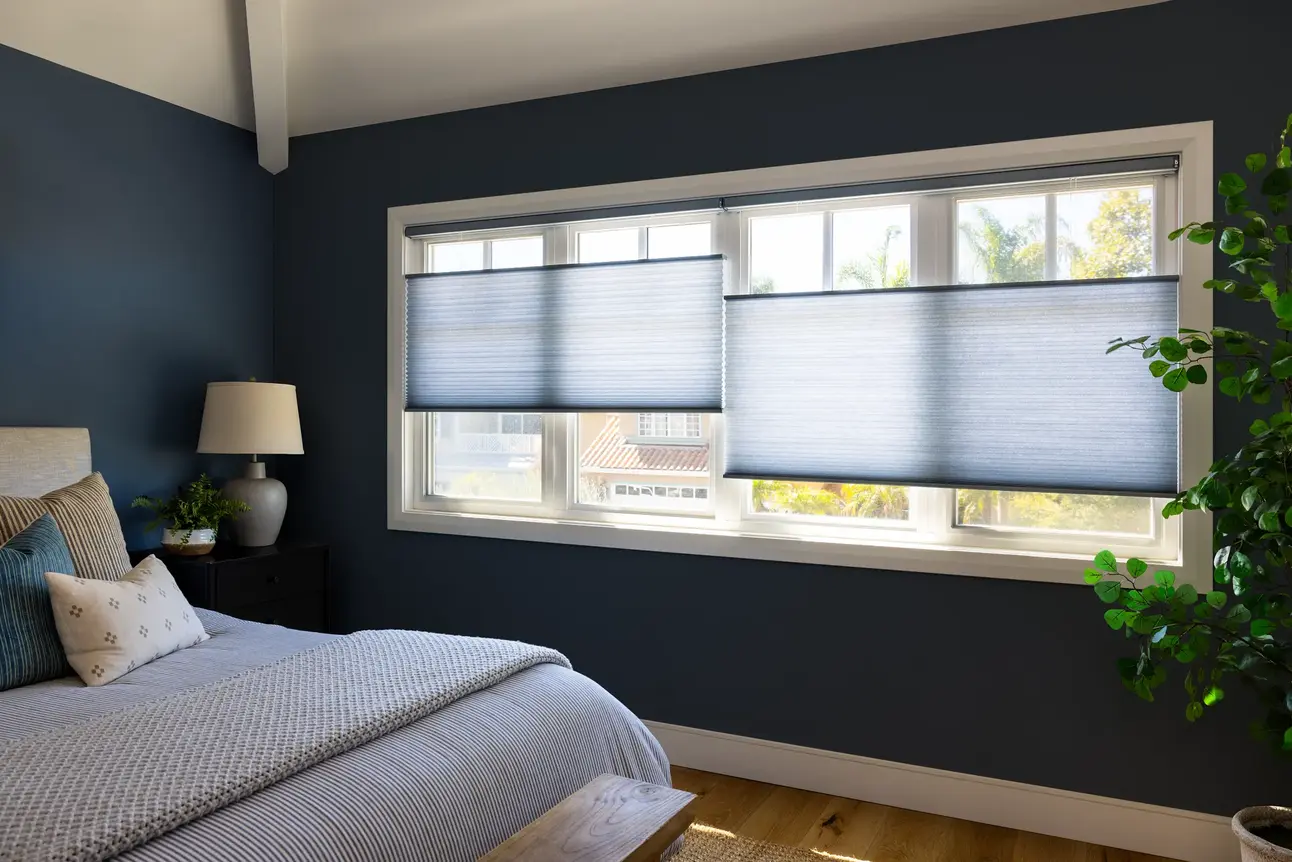
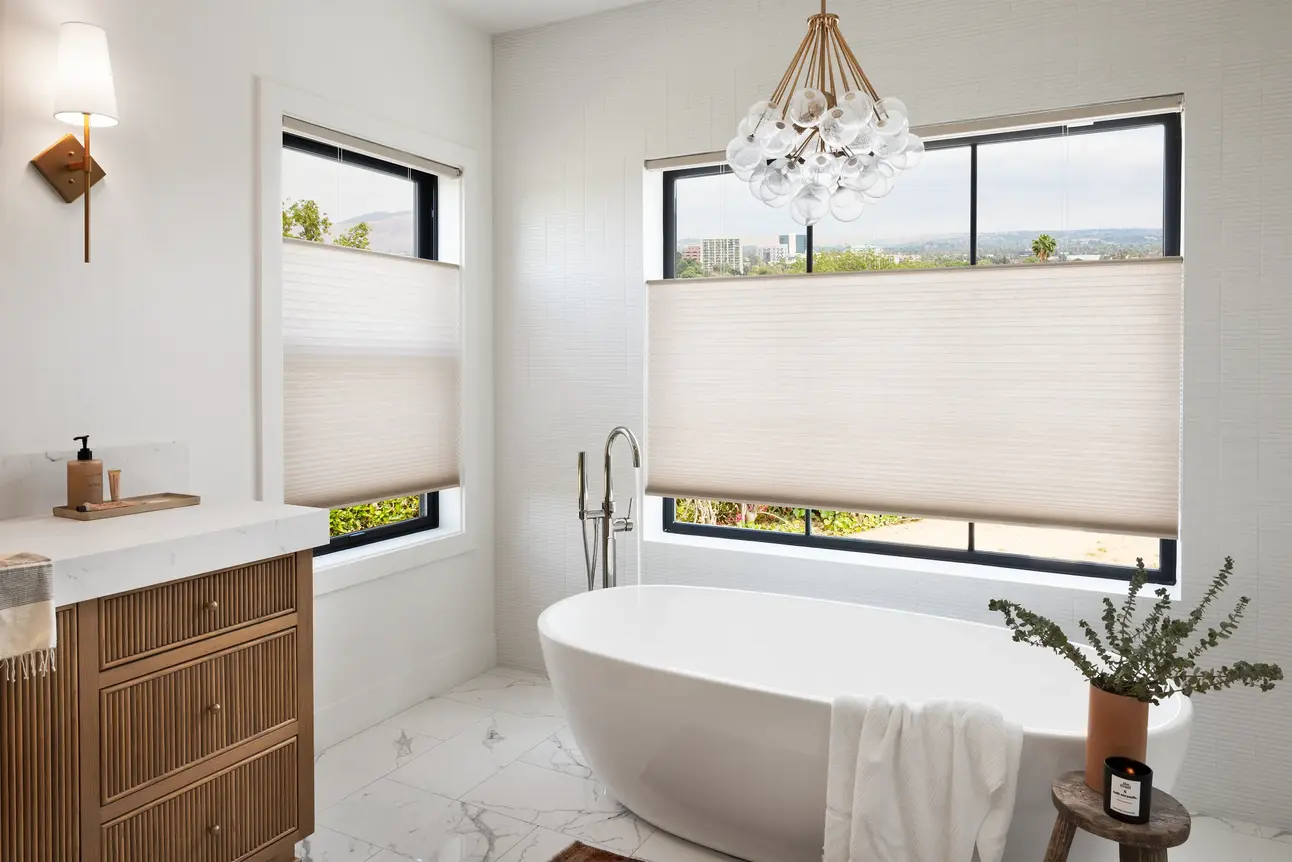
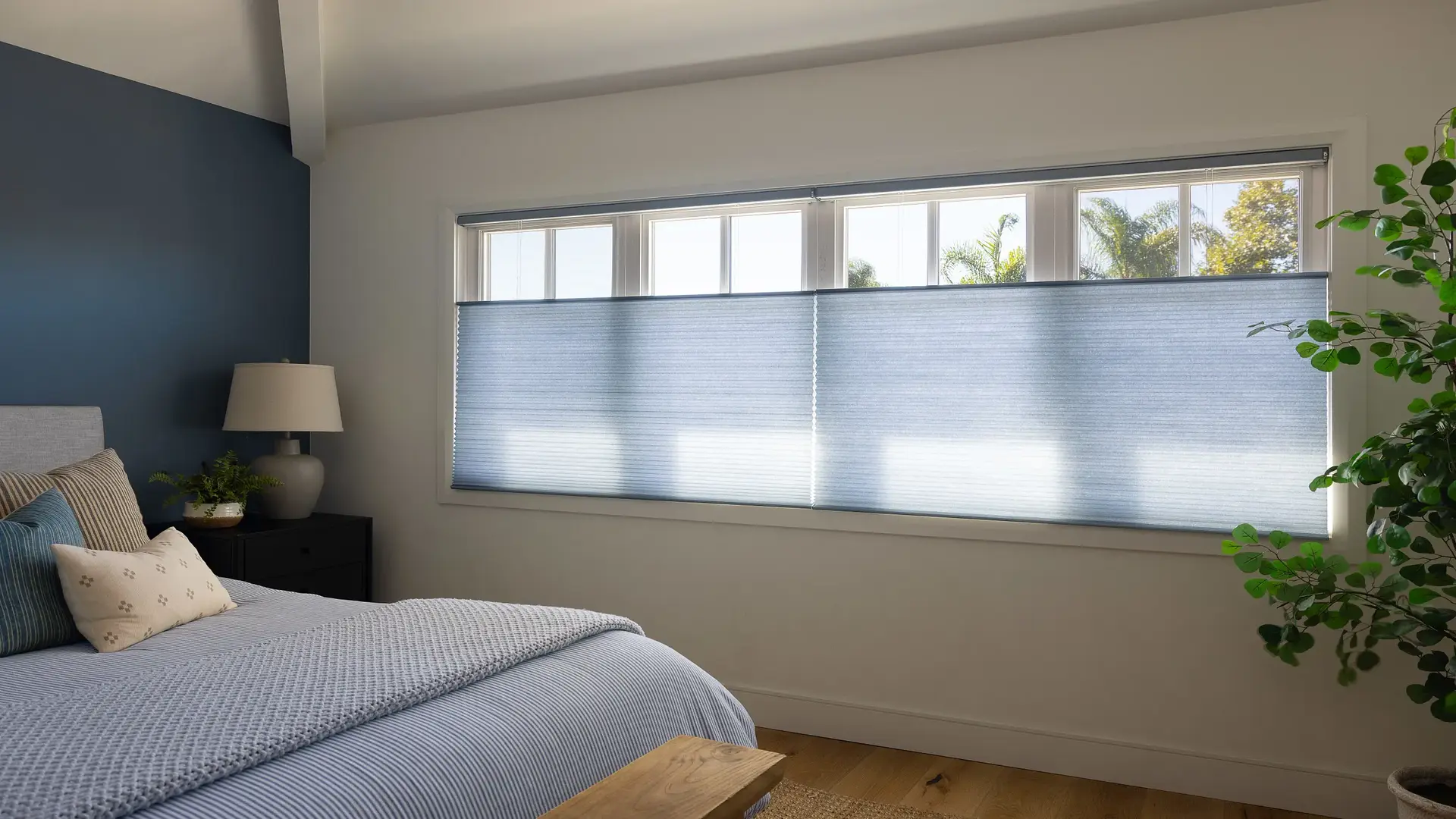
Top-down/bottom-up functionality solves a common privacy challenge, maintaining seclusion while still enjoying natural light. Lower the shade from above to block street-level views, or raise it from below to preserve privacy near the floor. This flexibility works particularly well for ground-floor windows where neighbors or pedestrians might look in.
Day-night cellular shades combine two fabric types in one product. Use the light-filtering panel during the day for soft illumination, then switch to the blackout section for complete evening privacy. This dual approach eliminates the need for layering multiple window treatments.
Cordless and Motorized Lift Systems
Modern operating systems improve both convenience and privacy performance. Cordless designs eliminate hanging cords that can create gaps or prevent shades from sitting flush against the window frame. The cleaner fit reduces light leakage that might compromise coverage.
Motorized systems add programmable scheduling, so shades can automatically lower at sunset for consistent evening privacy. Smart controls let you adjust multiple shades simultaneously, ensuring coverage throughout your home when interior lights come on.
How to Test Privacy Before Buying
Concerned about evening privacy? Testing cellular shades before you buy eliminates uncertainty about nighttime performance. Use these practical methods to evaluate how well different options protect your home after dark.
Daytime vs Nighttime Visibility Test
Ever wondered if others can see into your home at night? Try this simple method: close your cellular shades during daytime and step outside. What you see from the exterior, shapes, silhouettes, or just diffused light, represents approximately what neighbors will observe at night when your interior lights are on. This reversal principle gives you a realistic preview of your nighttime privacy.
Using Fabric Samples at Home
Request several fabric samples during your in-home consultation to test in your actual windows. Evaluate them under various lighting conditions, both during daylight hours and after dark with your lights on. This hands-on approach provides the most accurate assessment and eliminates guesswork from your decision.
What to Look for When Testing
Pay attention to these key factors during your evaluation:
Silhouette visibility: From inside, look toward your window. If you can see people's outlines walking by, expect similar privacy levels at night
Color impact: Darker colored cellular shades typically conceal silhouettes better than lighter options
Light diffusion: If you see light without discernible shapes, this indicates better nighttime privacy
Schedule your free in-home design consultation today to compare multiple options in your actual living space and make the right choice for your home.
Comparing Cellular Shades to Other Window Treatments
Understanding how cellular shades perform against other options helps you make the right choice for privacy and function.
Cellular vs Roller Shades
Cellular Shades use a honeycomb structure that traps air for insulation, making them more energy-efficient than Roller Shades. Both offer opacity levels ranging from sheer to blackout for different privacy needs. Roller Shades deliver a cleaner, minimal appearance and typically cost less than cellular options. Maintenance differs significantly; roller shades wipe clean easily, while cellular shades need more careful cleaning due to their textured honeycomb design. For a full look at these tradeoffs, see our breakdown of the pros and cons of Cellular Shades.
How Light-Filtering Privacy Shades Stack Up
Cellular shades offer moderate to good privacy during both day and night. Blackout Roller Shades excel at nighttime privacy but lack the insulation benefits of cellular construction. The brightness of your indoor lighting plays a major role stronger interior light increases the chance of visible silhouettes regardless of shade type. When maximum privacy matters, blackout versions of either cellular or roller shades perform best.
Choosing the Right Shade for Each Room
Not all rooms need the same level of brightness and privacy. Each space has unique requirements based on how you use it, the time of day you're active there, and what feels comfortable for your family.
Best Rooms for Light Filtering Shades
Living rooms and family areas work well with light-filtering cellular shades. These spaces benefit from the bright, welcoming atmosphere that diffused daylight creates, while still reducing glare on televisions. Home offices gain from the comfortable illumination that minimizes eye strain during computer work. Kitchens and dining spaces thrive with light filtering options since these gathering areas need the warm, inviting feel that filtered sunlight provides. Bathrooms without close neighbors can maintain brightness while offering sufficient daytime privacy with light-filtering cellular shades.
Where Blackout Shades Work Better
Bedrooms require stronger coverage, especially for light-sensitive sleepers or shift workers who need daytime rest. Sleep cycles depend on consistent darkness, making blackout essential for quality rest. Nurseries similarly need reliable darkness for nap schedules regardless of time. Home theaters and media rooms perform best with blackout options that eliminate screen glare and reflections. Street-facing windows or bathrooms with close proximity to neighbors often need the enhanced protection that blackout cellular shades provide.
Layering Options for Flexible Control
Combining light-filtering shades with blackout curtains gives you options throughout the day. This approach allows filtered daylight when you want brightness and complete darkness when you need privacy or sleep. Bedrooms especially benefit from layering cellular shades with weighted curtains to enhance both insulation and blackout performance. Schedule your free in-home design consultation to explore options that match each room's specific function and your family's daily routines.
Conclusion
Cellular shades provide flexible privacy solutions that adapt to your daily routines and room-specific needs. Light filtering options create bright, comfortable spaces during the day while offering moderate evening coverage. Blackout versions deliver dependable protection when complete privacy matters most.
Your room's function determines the right choice. Light filtering cellular shades work well in living areas, kitchens, and spaces where gentle illumination enhances daily activities. Bedrooms, nurseries, and street-facing bathrooms benefit from blackout options that prevent silhouettes from appearing when interior lights are on.
Testing samples in your actual windows eliminates guesswork. The daytime visibility test, stepping outside with shades closed during daylight, shows you exactly what neighbors might see at night. Fabric samples let you evaluate different options under real lighting conditions in your home.
Customization features expand your privacy options. Double cell construction, top-down/bottom-up operation, and cordless or motorized controls all contribute to better coverage and convenience. Layering cellular shades with curtains adds flexibility for rooms that need both filtered daylight and complete darkness.
Cellular shades balance light control, energy efficiency, and privacy better than most window treatments. Their honeycomb structure provides insulation benefits that roller shades cannot match, while offering the same range of opacity levels from sheer to blackout.
Ready to explore cellular shade options tailored to your home's privacy needs? Schedule your free in-home design consultation to see samples, compare fabrics, and find solutions that keep your spaces bright during the day and private after dark.

.png?Status=Master&sfvrsn=837b23bd_1)
.png?Status=Master&sfvrsn=f55daebb_1)