.webp?Status=Master&sfvrsn=4df45337_4)

.png?Status=Master&sfvrsn=4c04cf13_1)
.png?Status=Master&sfvrsn=d5947d95_1)
.png?Status=Master&sfvrsn=2b1efdd1_1)
Your window treatments are probably more dated than you think, and outdated styles aren't just an aesthetic problem. They're costing you money in energy bills, blocking natural light, and working against the way you actually live. Here's what to do about it in 2026.
Key Takeaways
- Replace outdated styles: Heavy valances, thin aluminum blinds, and stiff box pleats block light, create visual clutter, and date your home immediately
- Consider smart automation: Motorized shades integrate with your home system for voice control, scheduling, and security
- Layer for better control: Pairing sheer curtains with blackout shades can reduce heat loss by up to 40% while giving you flexible light options throughout the day
- Focus on energy efficiency: Cellular and Solar Shades decrease energy consumption by 10-25% and block up to 99% of UV rays that fade furniture
- Match treatments to rooms: Not every room needs the same solution, and the right pairing saves money and improves comfort
- Do the math on cost: A quality Cellular Shade can cost less per year than an inexpensive vinyl blind once you factor in replacement cycles and energy savings. The numbers may surprise you.
Window Treatments to Avoid in 2026
Several window treatment styles that dominated homes for decades now work against modern living needs. When you're updating your space, understanding which approaches create problems helps you make better choices for both function and style.
Heavy Traditional Valances and Cornices
Elaborate valances with heavy swags and ornate details gained a bad reputation in the late 20th century due to overly frilly, overly matched, and overly complicated designs. Heavy swags, either on a cornice or a roman shade, can instantly date a window treatment back to the '80s. These bulky top treatments overwhelm rooms and block the natural light that homeowners now prioritize for brighter, more welcoming spaces.
Oversized valences rank as the worst offender, creating visual clutter rather than architectural interest . The issue isn't decoration itself, it's that these treatments often sacrifice function for fussy details. While modern cornices with clean lines are making selective comebacks, the traditional elaborate versions with carved wood and heavy fabrics belong firmly in the past.
Thin, Flimsy Blinds
Generic aluminum mini blinds from the 1980s or '90s cheapen the look of your home. These thin, flimsy options typically come with the home from the previous owner or can be found in a rental. You know the type: barely functional, slightly bent slats that never quite close properly.
Traditional vertical and horizontal blinds create harsh lines that don't complement softer, more architectural interiors. Vinyl blinds with their plasticky white appearance have become an eyesore. Beyond aesthetics, these lightweight options often warp, fade, and break within a few years, making them a poor investment even at low prices.
Stiff Box Pleat Drapery
Box pleats and French pleats carry a perception of being stiff and stuffy. While these structured folds can offer a tailored look, they create a formal, bulky appearance that feels outdated. Stiff drapery that resembles a quilt more than a curtain kills the vibe of the lived-in, inviting space that current design favors.
The contemporary aesthetic emphasizes material that is airy and breathable instead. Modern drapery focuses on natural drape and softer folds that move with air circulation rather than rigid, structured pleats that stand at attention.
Shutters in Every Room
Shutters have limitations regarding letting in light and furniture placement. They don't offer complete blackout the way Roller Shades or Blackout Blinds do, with light leaking around edges or through gaps between louvers.
Shutters can also block out too much light and make rooms too dark in many applications. Their rigid frame and louver style lock you into a certain aesthetic that may lack versatility. While shutters work well in specific situations, installing them throughout an entire home limits your design flexibility and can create a monotonous look.
Stark White Window Coverings
Purely white treatments create harsh, clinical aesthetics that feel cold rather than fresh. These bright white options often clash with warmer paint colors and create stark contrast that draws attention to the window treatment rather than the view outside.
Similarly, anything hung improperly or too short immediately appears dated. Proportion matters as much as color choice.
Purely Decorative Non-Functional Treatments
Curtains installed purely for decoration leave homeowners with "illusion drapes" that don't actually block light or provide privacy. While they may look pretty, panels that can't fully close fail to serve the primary purpose of window coverings.
Functionality now matters just as much as style. Modern window treatments need to perform, whether that's controlling light, improving privacy, or helping with energy efficiency.
What's In: Top Window Treatment Trends 2026
Window treatments worth installing in 2026 solve real problems. Better light control, meaningful energy savings, and effortless operation have replaced "looks nice" as the baseline expectation. These are the styles delivering on all three.
Smart and Motorized Window Shades
Motorized shades have crossed the line from luxury to practical. They connect to Amazon Alexa, Google Assistant, and Apple HomeKit, respond to voice commands, and run on schedules that adjust your home's light and temperature without you thinking about it. When you're traveling, automated schedules simulate occupancy and maintain privacy. Battery-powered options need recharging only once or twice a year, which makes the "it's too complicated" objection hard to justify at this point.
Layered Window Treatments for Flexibility
Two treatments on one window sounds like overkill until you've lived with it. Pairing sheer curtains with blackout shades gives you soft filtered light during the day and complete darkness when you need it, and the combination can reduce heat loss by 40% or more. Roller Shades with curtains and Cellular Shades beneath drapery are the most popular pairings right now, adding visual depth while protecting your primary treatments from UV damage.
Textured Natural Fabrics
Linen, cotton, and bamboo have replaced synthetic solids as the default choice for fabric treatments. These materials bring warmth and texture into a room without trying too hard, and they hold up well in living rooms and bedrooms where you want a relaxed, lived-in feel rather than something that looks like it came with the model home.
Slim-Profile Minimalist Designs
Roller Shades and Cellular Shades earn their place in contemporary homes by practically disappearing when raised. In open-concept spaces where visual clutter competes with clean architecture, a treatment that gets out of the way is exactly the right choice.
Energy-Efficient Cellular and Solar Shades
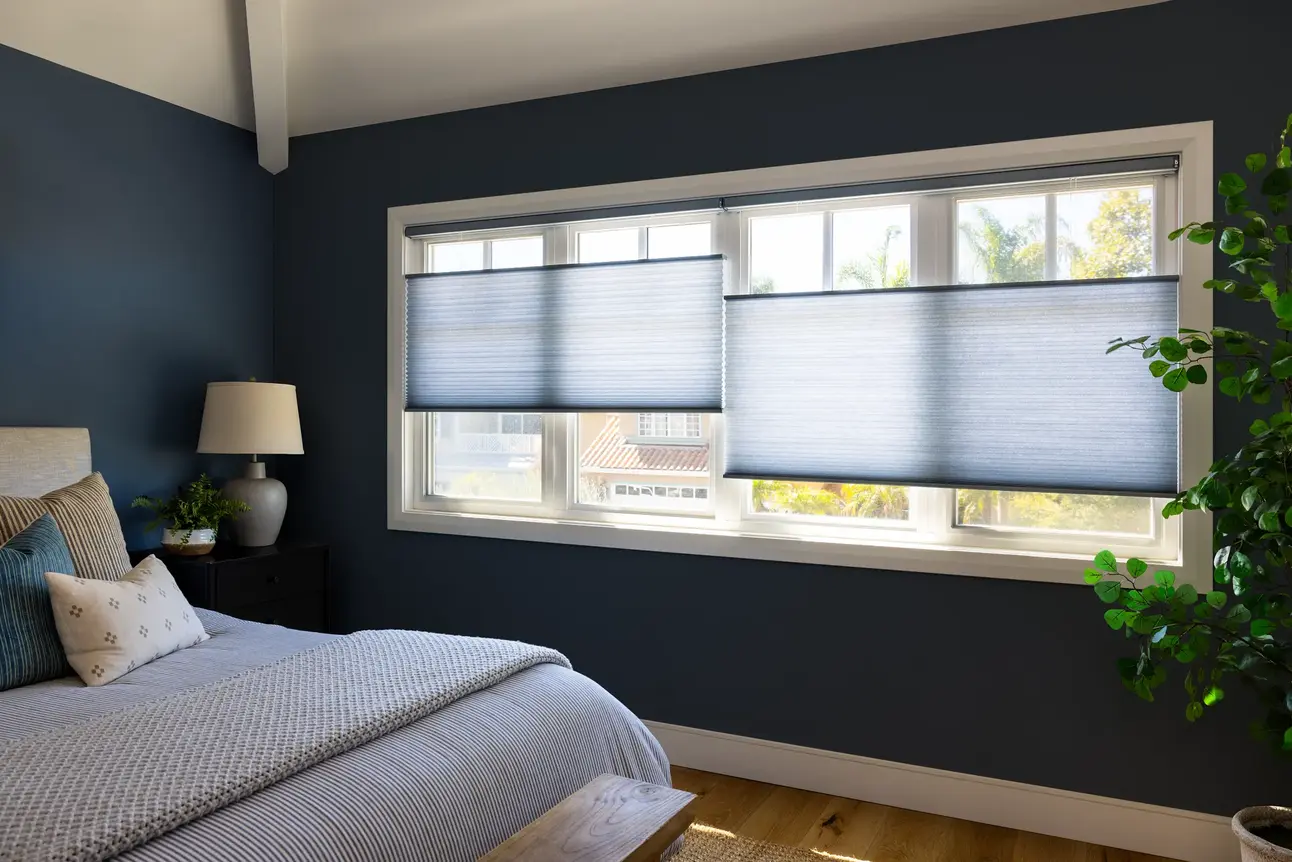
Cellular Shades trap air in their honeycomb structure and reduce heat loss by up to 40% in winter and heat gain by up to 60% in summer. Solar Shades take a different approach, blocking up to 99% of UV rays while filtering light and cutting overall energy consumption by 10-25%. Cellular Shades are the right call for bedrooms and living areas where insulation is the priority. Solar Shades make more sense for kitchens and home offices where you want glare control without losing the view.
Matching Window Treatments to Your Room's Needs
Every room in your home makes different demands on its window treatments. Getting this right means thinking less about what looks good in a showroom and more about what actually performs once you're living with it.
Living Room Solutions That Balance Light and Style
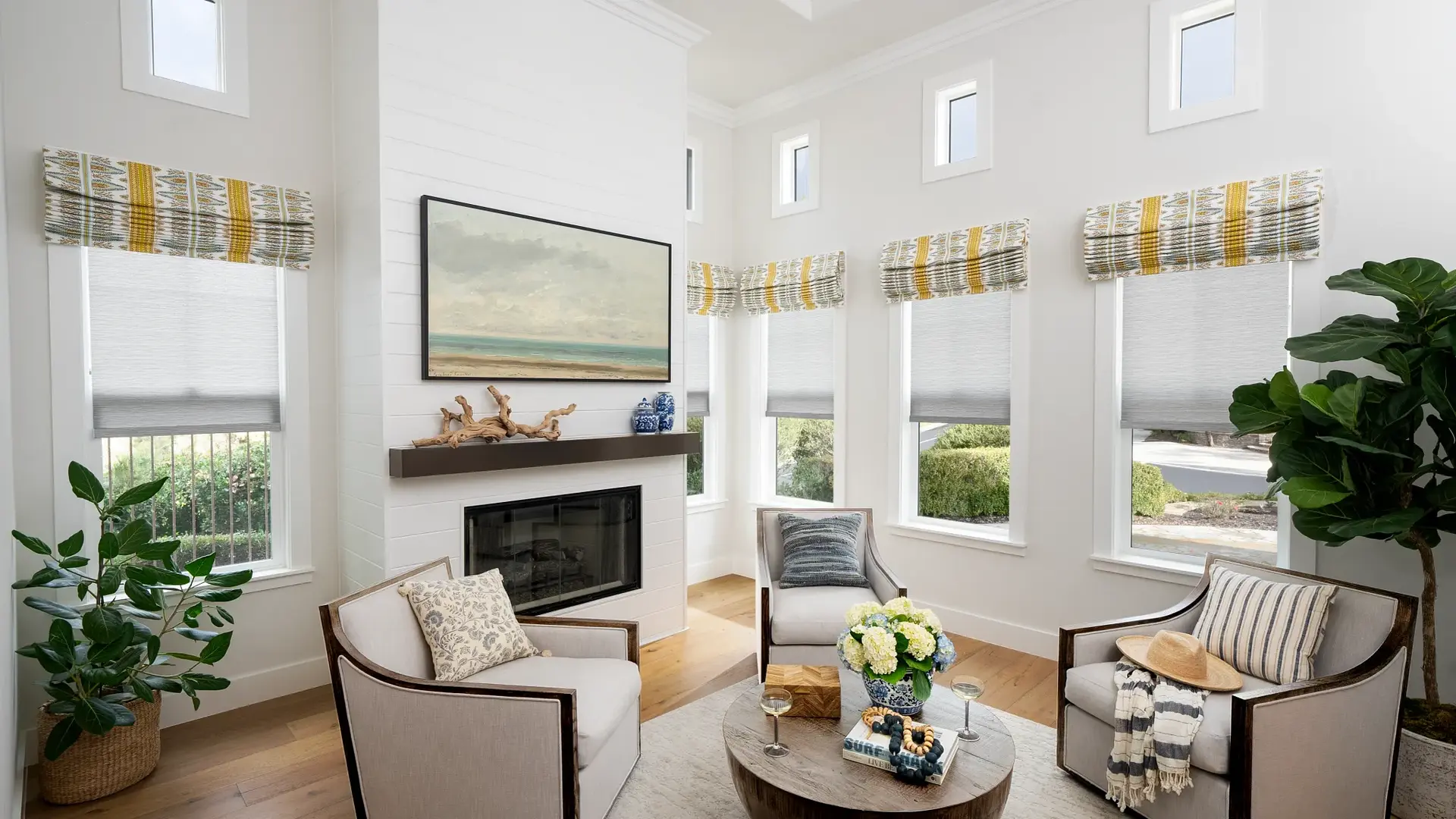
Living rooms need to work hard across a long day. Roller Shades are the workhorse choice here. They disappear completely when raised, keeping the space feeling open and uncluttered, and they pull down easily when afternoon glare becomes a problem. Layering Cellular Shades with lightweight curtains adds insulation and visual depth without overwhelming the room. For large windows, statement drapery with clean lines anchors the space well, but heavy fabrics that fight the room's proportions are a mistake you'll notice every day.
Woven Wood Shades are worth considering for living rooms that want natural texture. They filter light beautifully and pair well with sheer panels for rooms that need more flexibility.
Bedroom Window Treatments for Better Sleep
Bedrooms have one non-negotiable requirement: reliable darkness. Cellular Shades with side channels are the strongest performers here, eliminating the narrow light gaps that appear around standard inside-mount installations. Their honeycomb construction also dampens outside noise and helps regulate temperature year-round, which makes them genuinely useful beyond just blocking light.
Dual roller systems offer the most flexibility, with light-filtering fabric for daytime and blackout coverage at night. Roman Shades with blackout lining are a strong alternative for bedrooms where you want a softer, more elegant look alongside serious performance.
Kitchen and Bathroom Window Coverings
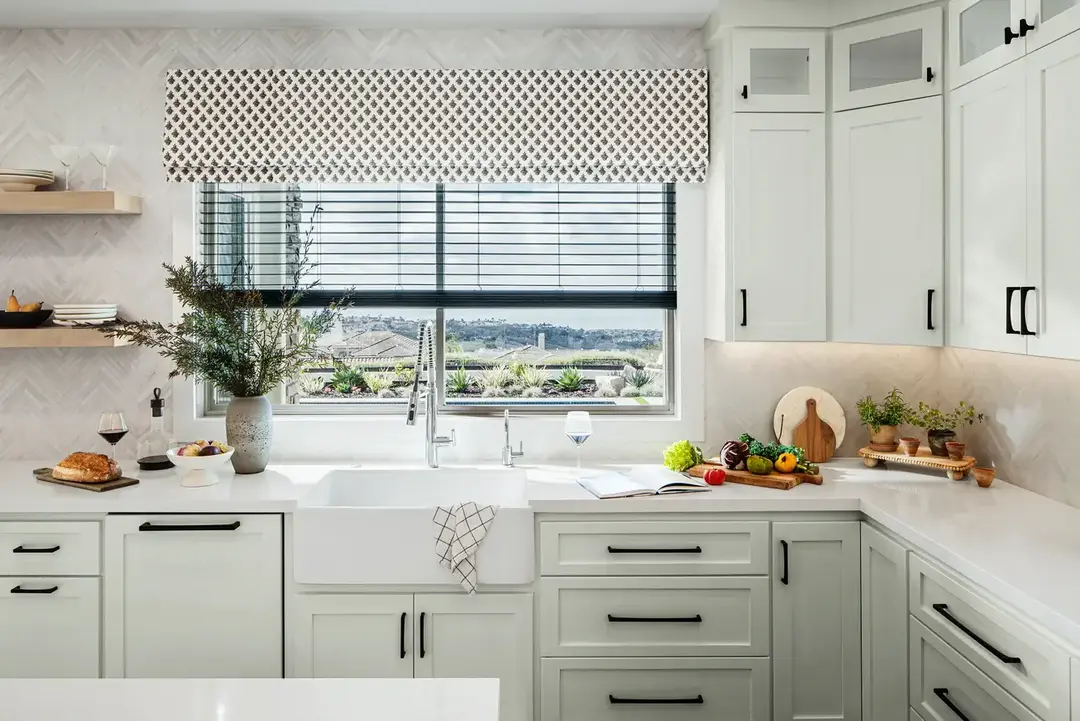
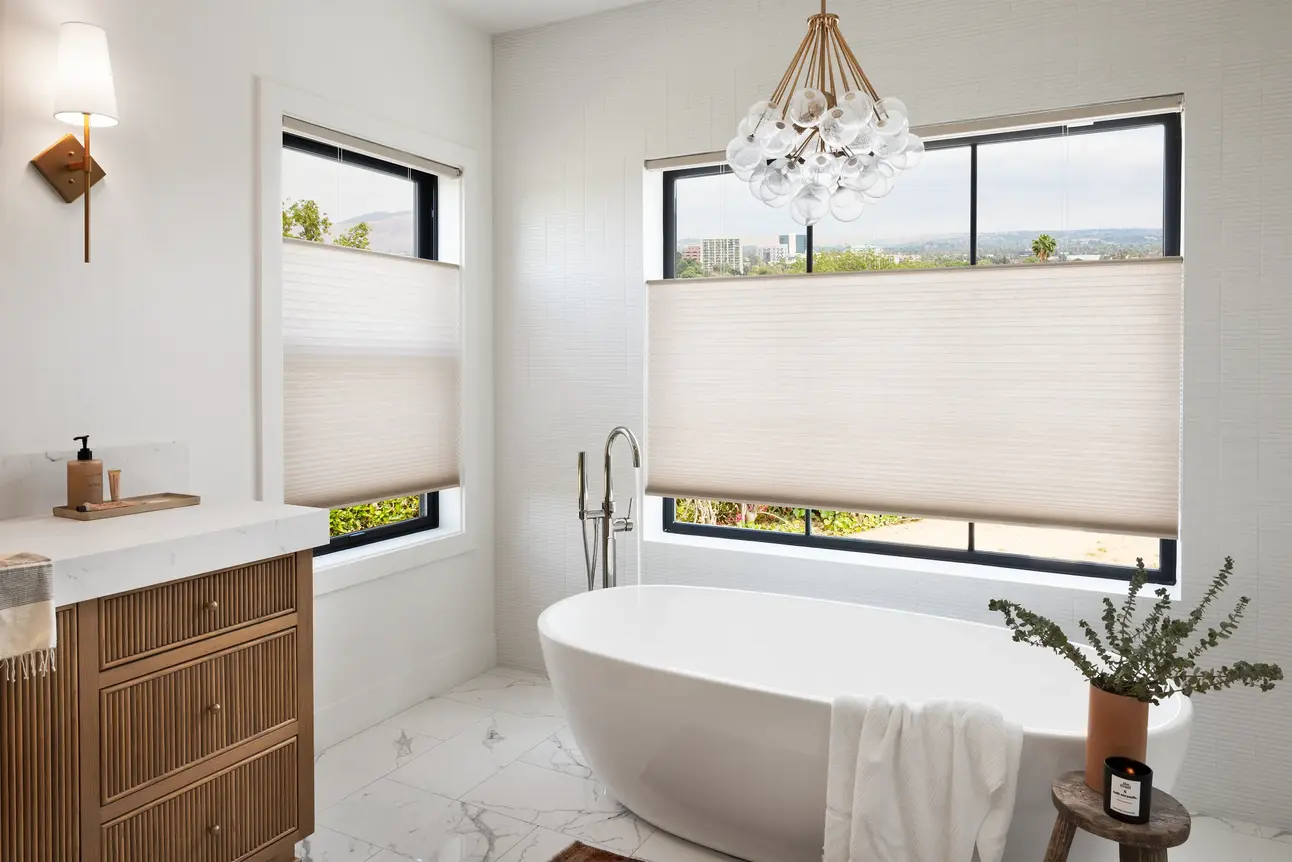
Humidity disqualifies most fabric options and untreated wood outright. Faux Wood Blinds, Solar Shades, and Faux Wood Shutters handle moisture without warping and wipe clean easily, which matters more in a kitchen or bathroom than in any other room. Café curtains are making a real comeback in kitchens, covering the lower half of the window for privacy while letting light through the top section. It's a practical solution that happens to look good above a sink.
Bathrooms adjacent to showers need the most moisture-resistant options available. Faux Wood Shutters and Faux Wood Blinds are the reliable choice for those conditions.
Large Windows and Specialty Shapes
Large windows and unusual shapes require custom thinking. Floor-to-ceiling windows almost always need motorized Roller Shades. Manual operation becomes impractical at a certain scale, and the difference in daily convenience is significant enough that motorization stops feeling optional.
Arched windows need treatments that follow the curve rather than cut across it. Cellular Shades work well in sunburst patterns, and shutters can be custom-built for arches, half-rounds, triangles, octagons, and other specialty shapes. Accurate measurement is critical at this scale. A small gap that's barely noticeable on a standard window becomes a conspicuous light leak across an expanse of glass.
Read here for more guidance on Window Treatments for Large WindowsReady to Shop? Start With the Right Foundation
Knowing what's trending is only half the equation. Before you invest in any of the styles above, it's worth understanding how to evaluate window treatments for your specific rooms, budget, and light control needs. We've covered that in detail on our window treatments page.
Learn how to choose the right window treatment for your home
Looking for specific style inspiration? Our guide to trendy window covering ideas walks through six popular options worth considering for your home.
The Bottom Line
Window treatments are one of those things people tolerate for years longer than they should. The blinds that came with the house stay up because replacing them feels complicated, and the energy bills and blocked light become background noise. They shouldn't.
The options available in 2026 are better looking, smarter, and more energy efficient than anything that came before them. The math on quality treatments versus inexpensive replacements is closer than most people expect, and the daily difference in how your home looks and feels is not.
If your current treatments are more than seven years old, they're likely costing you more than you think. That's a good place to start.
Not sure where to start? We can help.
A free in-home consultation takes the guesswork out of choosing the right window treatments for your space. We'll measure, advise, and walk you through the options that make the most sense for your home and budget.

.png?Status=Master&sfvrsn=837b23bd_1)
.png?Status=Master&sfvrsn=f55daebb_1)