.webp?Status=Master&sfvrsn=4df45337_2)

.png?Status=Master&sfvrsn=4c04cf13_1)
.png?Status=Master&sfvrsn=d5947d95_1)
.png?Status=Master&sfvrsn=2b1efdd1_1)
Key Takeaways
- Light control flexibility: Zebra Shades let you adjust brightness and privacy throughout the day without raising or lowering the shade. Simply shift the fabric layers to align solid or sheer stripes
- Fabric selection by room: Choose light-filtering options for living spaces where you want soft illumination, or room-darkening fabrics for bedrooms that block most light.
- Color and design impact: Neutral shades like white, gray, and beige work with any decor, while the distinctive striped pattern makes any color choice a prominent design feature
- Operating systems: Cordless mechanisms provide safe, clean operation for families with children, while motorized controls offer smart home integration and convenience for multiple windows
- Best applications: These shades perform well in living rooms, dining areas, and offices, but avoid bathrooms, media rooms needing complete blackout, or very narrow windows
- Professional guidance matters: Seeing fabric samples, testing light control, and ensuring proper fit requires expert consultation to match your specific windows and lighting goals
Zebra Shades, also called Zebra Blinds or banded shades, offer a unique combination of the soft filtered light of a Roller Shade and the versatile privacy of a Blind in one sleek window treatment. Unlike standard Blinds or Roller Shades, their dual-layer fabric design lets you adjust light and visibility without having to raise the entire shade completely. By shifting alternating sheer and solid fabric bands, you can create anything from softly diffused daylight to enhanced privacy with a clean, modern look.
Are you considering light-filtering Zebra Shades for a living room, cordless options for child safety, or motorized systems for convenience? The choices can feel overwhelming when you factor in fabric opacity, colors, hardware options, and custom sizing. This guide breaks down everything you need to select zebra shades that match both your home's style and functional requirements.
How Do Zebra Shades Work?
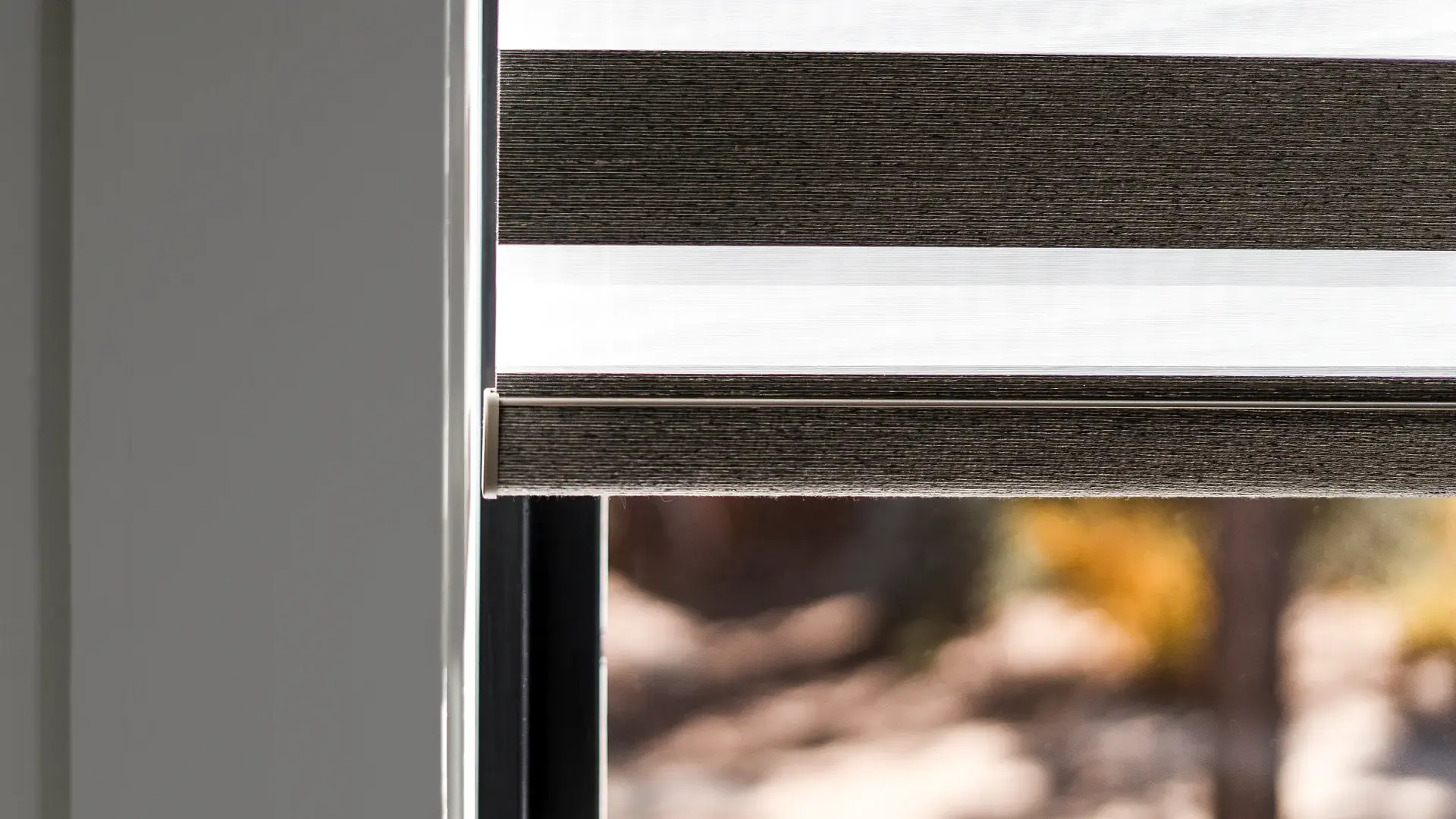
Zebra Shades use a continuous loop of fabric with alternating solid and sheer horizontal stripes. When you operate the cord or bottom rail, this fabric loop moves over a roller mechanism, allowing the front stripe layer to shift past the back layer. This creates two distinct alignment options: solid over solid, or solid over sheer.
“Solid over solid” is when solid stripes align over solid bands; the sheer sections remain uncovered, creating filtered light that brightens your room while maintaining daytime privacy. “Solid over sheer” is when you shift the alignment so solid stripes overlay the sheer sections, and you block most light while keeping full privacy. The adjustment works much like tilting slats on traditional blinds.
You have complete flexibility with positioning. Raise the shade fully for maximum natural light and unobstructed views, lower it partway for soft illumination, or close it with solid bands aligned for privacy. The key advantage over standard roller shades is that you can adjust light control at any height, stop the fabric halfway, and still shift the stripe alignment for precise brightness management.
One important consideration: Zebra Shades won't achieve complete blackout like dedicated blackout roller shades. The dual-layer construction allows small amounts of light to pass through gaps between fabric bands. However, choosing the right fabric density and ensuring proper installation can deliver room-darkening results that work well for bedrooms or media rooms.
How to Select the Right Fabric for Your Space
Fabric Opacity and Light Control
The fabric you choose affects how your Zebra Shades manage light, privacy, and visibility throughout the day. Light-filtering fabrics soften daylight while maintaining daytime privacy, making them ideal for living rooms and dining spaces. Room-darkening fabrics use more opaque materials to reduce incoming light to create a more controlled environment for bedrooms or home offices.
When comparing fabrics, it helps to understand a few key differences:
- Openness: The sheer band's openness affects how much filtered light and outside visibility you maintain when the shade is in the open position. More open weaves allow brighter light and clearer views, while tighter weaves provide additional privacy.
- Light Transmission: The solid fabric bands determine how much light passes through the shade when closed. Some fabrics softly diffuse light, while others are designed to darken the room more effectively.
Understanding Fabric Construction
Zebra Shades are primarily made with polyester. Polyester maintains color better than natural fibers, resisting fading for years with proper care. The material also resists stains and keeps the alternating strips aligned during daily use.
The shade itself is constructed from a continuous loop of layered polyester fabric featuring alternating sheer and solid horizontal bands. As the shade moves through the roller system, the front and back fabric layers shift independently, allowing the bands to align in different positions for varying levels of light control and privacy.
Selecting Colors and Textures That Work with Your Space
Choosing the right color for your Zebra Shades affects both how they perform and how they look in your room. The striped pattern amplifies whatever color you select, making it a prominent design element rather than a subtle accent.
Popular Color Options for Different Rooms
Neutral colors like beige, taupe, and soft gray offer the most flexibility across different decor styles. These shades complement existing furniture without competing for attention. White and cream work particularly well if you want your Zebra Shades to blend into the background, letting other room elements take center stage.
Bold earthy tones like olive green, terracotta, and warm brown can add depth, warmth, and personality to a space while pairing beautifully with wood furniture and natural textures. If the shade will be installed in a window with heavy sun exposure, keep UV exposure in mind. Because Zebra Shades use a continuous loop of fabric that rotates through the roller system, darker colors may show fading more noticeably over time than lighter neutrals.
Lighter pastels can make smaller rooms feel more open and airy. These work best in bedrooms or spaces where you want a gentle, calming atmosphere.
Matching Your Shades to Your Room Style
Different interior styles call for different color approaches. Minimalist and contemporary spaces benefit most from white, gray, or soft beige Zebra Shades that maintain clean lines without visual clutter. Industrial or urban-style rooms pair well with deeper grays or charcoal that contrast nicely with metal fixtures and exposed wood.
If your home follows Scandinavian design principles, soft whites or muted grays enhance the bright, airy feel these spaces are known for. The key is understanding that Zebra Shades won't fade into the background like some window treatments - the alternating stripe pattern makes them noticeable regardless of color choice.
Fabric Textures That Add Visual Interest
Beyond color, texture plays a role in how your zebra shades integrate with your decor. Linen-like weaves and subtle woven patterns add depth and visual richness without overwhelming the space.
During your free in-home consultation, you can compare different texture samples side by side and see how they look with your existing lighting and furnishings. This hands-on comparison helps ensure your motorized zebra shades coordinate well with your room's overall aesthetic.
Operating Systems and Installation: Cordless vs. Motorized Control
The right operating system for your Zebra Shades depends on your daily routines and window accessibility. Both cordless and motorized options deliver the same light control performance, but they differ in convenience, safety, and price.
Cordless Zebra Shades
Cordless operation uses a spring mechanism inside the roller tube. Push or pull the bottom rail to raise, lower, or adjust the fabric alignment. The shade holds position at any height without external power or dangling cords.
Benefits:
- Safe for homes with children and pets
- Clean appearance without cord clutter
- Simple operation for everyday use
Consider cordless for:
- Windows within easy reach
- Bedrooms and living rooms with standard ceiling heights
Motorized Zebra Shades
Motorized systems replace the spring with a battery-powered motor in the headrail. Control through remote, smartphone app, or voice commands via Alexa or Google Home. Battery packs often last several months to over a year, depending on usage.
Benefits:
- Effortless operation for hard-to-reach windows
- Smart home integration with scheduling capabilities
- Convenient for multiple windows
- Consistent daily routines
Consider motorized for:
- High windows or vaulted ceilings
- Multiple shades operated together
Mounting Options for Better Performance
Inside mount installation positions the shade within the window frame for a built-in look that showcases trim. This creates minimal gaps around the edges, though slight light leakage on the sides is normal.
Outside mount extends beyond the frame, covering the entire window opening for improved light control and privacy. Choose outside mounting when you need maximum coverage or when the window depth is shallow.
Inside mount works best for:
- Standard window depths of 2 inches or more
- Showcasing decorative trim
- Built-in appearance
Outside mount delivers:
- Better light control and privacy
- Full window coverage
- Solution for shallow window frames
Ready to test cordless and motorized options? Your design consultant can help you explore operating systems and determine which mounting style works best for your specific windows.
Where do Zebra Shades Work Best? (and Where They Don't)
Best Room Applications
- Living Rooms, Dining Rooms, and Home Offices: Zebra Shades work beautifully in spaces where you want flexible light control throughout the day. The dual-layer design lets you adjust privacy and brightness without fully raising or lowering the shade, making them ideal for rooms where lighting needs change frequently.
- Bedrooms: Zebra Shades with room-darkening fabrics help reduce morning light and create more comfortable sleeping conditions. While they won't produce a complete blackout like dedicated blackout roller shades, they provide sufficient darkness for most sleepers when the solid bands are fully aligned.
- Large Windows and Patio Doors: Zebra Shades are well-suited for expansive openings because they can be installed as single-wide shades or divided into multiple panels for more customized control and operation.
- Kitchens: Zebra Shades can work well in kitchens when installed away from sinks, stovetops, and other high-moisture or grease-prone areas, since the fabric construction performs best in clean, dry conditions.
When to Consider Alternatives
Zebra Shades aren't suitable for every situation. Bathrooms and high-humidity areas require moisture-resistant options. Very narrow, small, or odd-shaped windows create installation challenges. Home theaters need complete blackout, which Zebra Blinds don't provide due to light leakage through sheer sections.
If maximum insulation is your priority, Cellular Shades deliver better energy efficiency. For bedrooms requiring total darkness, blackout roller shades eliminate light gaps that Zebra Shades can't address.
Not all rooms need the same window treatment approach. Focus Zebra Shades where their unique light-adjusting capability adds the most value to your daily routines.
Maintenance tips to keep your Zebra Shades looking their best:
Zebra Shades are designed for everyday use and are relatively easy to maintain with routine care. A few simple cleaning habits can help preserve the fabric’s appearance, minimize dust buildup, keeping the shade operating smoothly over time.
- Reduce static by lightly using an anti-static spray or gently wiping the fabric with a dryer sheet, especially during colder, drier months.
- Dust regularly with a feather duster or soft, dry cloth, and use a vacuum with a soft brush attachment for more thorough cleaning.
- Spot clean stains by gently blotting with a clean, damp cloth and mild, clear soap when needed.
- Avoid harsh chemicals, bleach, abrasive cleaners, or heavy rubbing, which can damage or discolor the fabric.
With proper care, Zebra Shades can maintain their modern appearance and light-filtering performance for years.
How Zebra Shades Compare to Other Window Treatment Options
Choosing the right window treatment depends on your specific needs for light control, privacy, and style. Use this comparison to see how Zebra Shades perform against other popular options:
| Feature | Zebra Shades | Roller Shades | Cellular Shades | Sheer Shades |
|---|---|---|---|---|
| Light Control | Variable adjustment without raising shade | Binary (up or down only) | Light filtering or room darkening | Soft filtered light through vanes |
| Privacy Options | Adjustable throughout the day | Absolute when lowered | Limited transparency | Moderate daytime privacy |
| Energy Efficiency | Moderate insulation | Minimal insulation | Superior (most energy efficient) | Low insulation |
| View When Open | Transparent view maintained | Full view when raised | Most fabrics block views | Filtered view |
| Best For | Living rooms, offices, flexible spaces | Bedrooms, media rooms | Energy savings, temperature control | Soft ambient lighting |
This comparison highlights common differences between Zebra Shades, Roller Shades, Cellular Shades, and Sheer Shades based on light control, privacy, insulation, view-through, and ideal room use.
While Zebra Shades may not be the best solution for every room, they offer a beautiful balance of style, privacy, and light control. If you need more room darkening in a bedroom or media room, Roller Shades with side channels may be a better choice. For maximum energy efficiency, Cellular Shades may offer stronger insulation thanks to their air-pocket design. But for homeowners looking for a modern, polished, and versatile window treatment that adapts easily throughout the day, Zebra Shades are a stylish and practical choice.
Next Steps
You now have the complete roadmap for selecting Zebra Shades that balance style, functionality, and everyday light control. Choosing fabric opacity, colors, and hardware options becomes much easier when you can see and feel samples in your own home. Our 3 Day Blinds specialists bring everything directly to you, take precise measurements, and answer questions specific to your windows during your FREE In-Home Consultation. Plus, your custom Zebra Shades are backed by the 3 Day Blinds Limited Lifetime Warranty for added peace of mind. Learn more about our warranty coverage and book your consultation today.