.webp?Status=Master&sfvrsn=4df45337_4)

.png?Status=Master&sfvrsn=4c04cf13_1)
.png?Status=Master&sfvrsn=d5947d95_1)
.png?Status=Master&sfvrsn=2b1efdd1_1)
Are you looking for window treatments that deliver both energy savings and style?
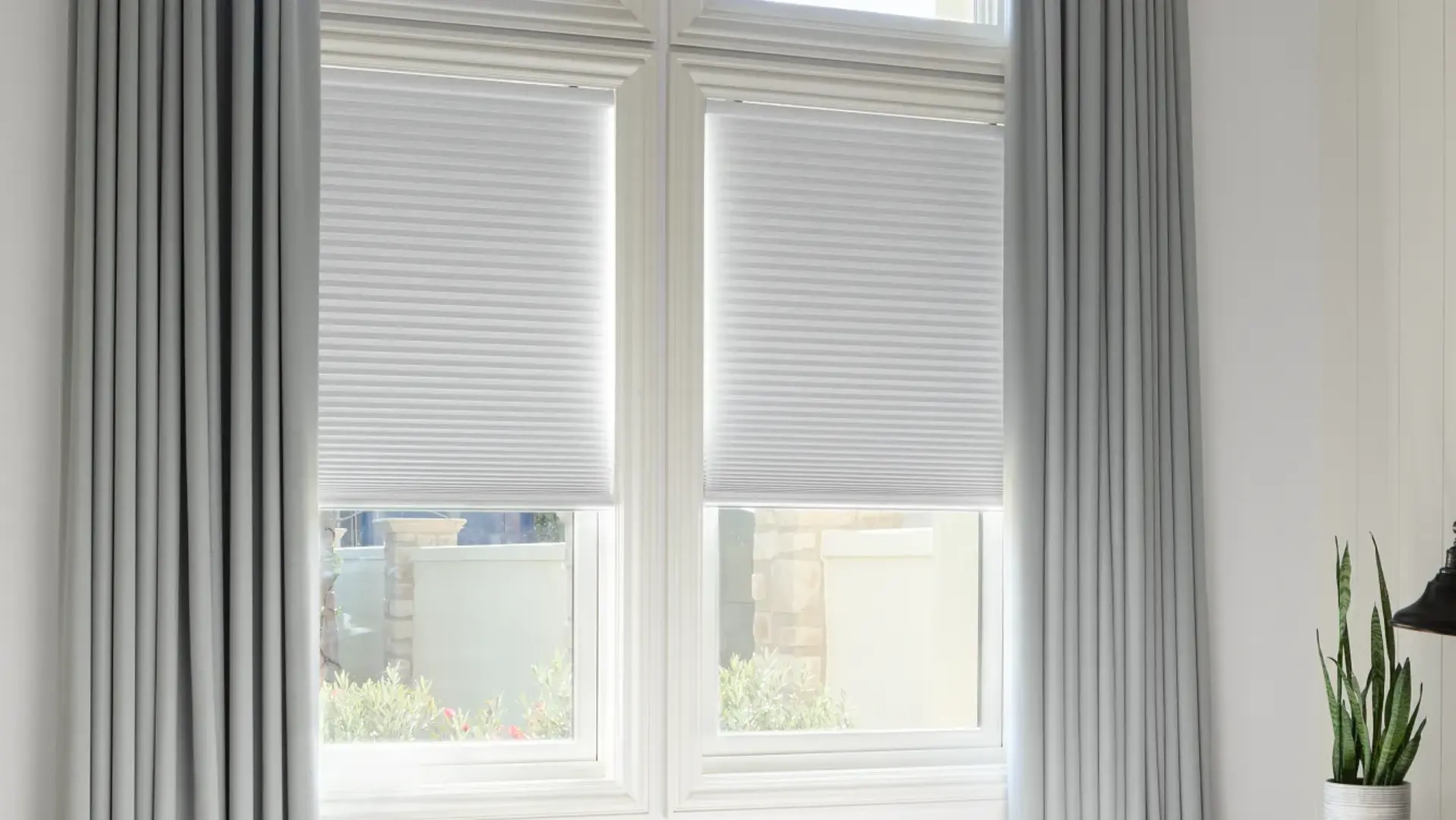
Layering Cellular Shades with Curtains creates extra insulation that can lower your energy costs while adding visual depth to your windows.
Cellular Shades, also known as Honeycomb Shades, trap air within their hollow compartments to insulate your windows. These "cells" form a barrier between your glass and your room, helping regulate indoor temperature. When you add Curtains over Cellular Shades, you create an additional layer of thermal protection that works especially well in homes with extreme weather conditions. This pairing addresses practical needs while serving as a design technique that improves both appearance and function.
Layering window treatments solves challenges that single coverings can't handle. You gain better light control throughout the day and enhanced privacy without darkening your rooms. Curtains over cellular shades can make windows appear larger by creating visual depth. This combination provides style and practical benefits you'll enjoy year-round.
Key Takeaways
Transform your windows into designer focal points while maximizing energy efficiency and functionality through strategic layering techniques.
• Layer for energy savings: Combining Cellular Shades with Curtains creates dual thermal barriers that reduce heat loss by up to 25% in winter and block unwanted heat gain in summer.
• Choose the right foundation: Start with light-filtering Cellular Shades for living areas or blackout options for bedrooms, then add complementary Curtains based on your room's specific needs.
• Master proper spacing: Mount Curtain rods 4-6 inches above window frames and allow adequate clearance between layers to prevent cramped appearance and ensure smooth operation.
• Avoid common mistakes: Balance textures by pairing smooth Curtains with textured shades, select colors within the same temperature family, and ensure elements complement rather than compete.
• Customize by room function: Pair blackout shades with thick drapes for bedrooms, light-filtering shades with sheers for living spaces, and neutral shades with patterned curtains for dining areas.
This layering approach delivers comprehensive solutions that single window treatments cannot match, combining superior insulation, flexible light control, enhanced privacy, and professional esthetics that make rooms appear larger and more thoughtfully designed.
Start with the Right Cellular Shades
Selecting the right Cellular Shades forms the foundation of successful layering. These shades serve as your base layer, providing the functional performance while your Curtains add style and additional benefits.
Light Filtering vs Blackout Options
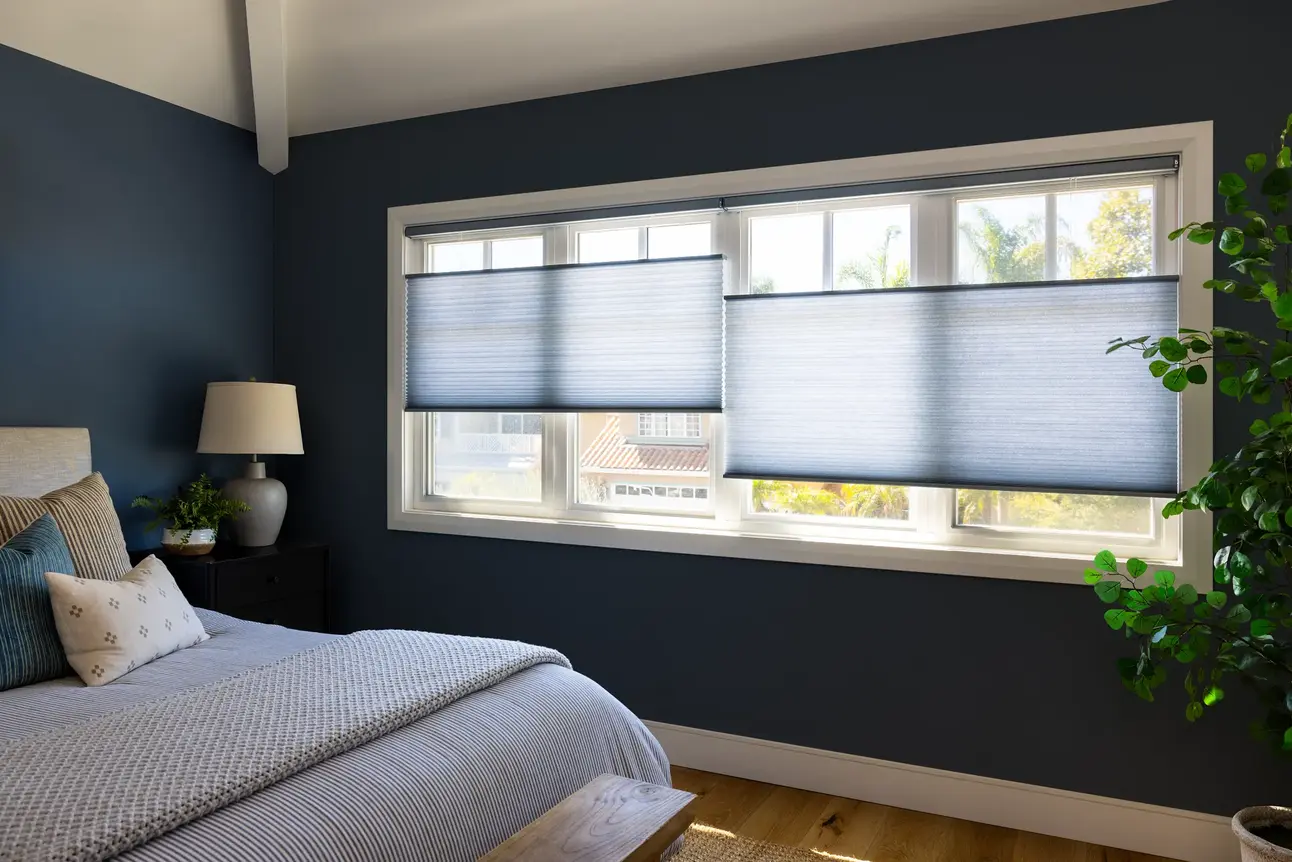
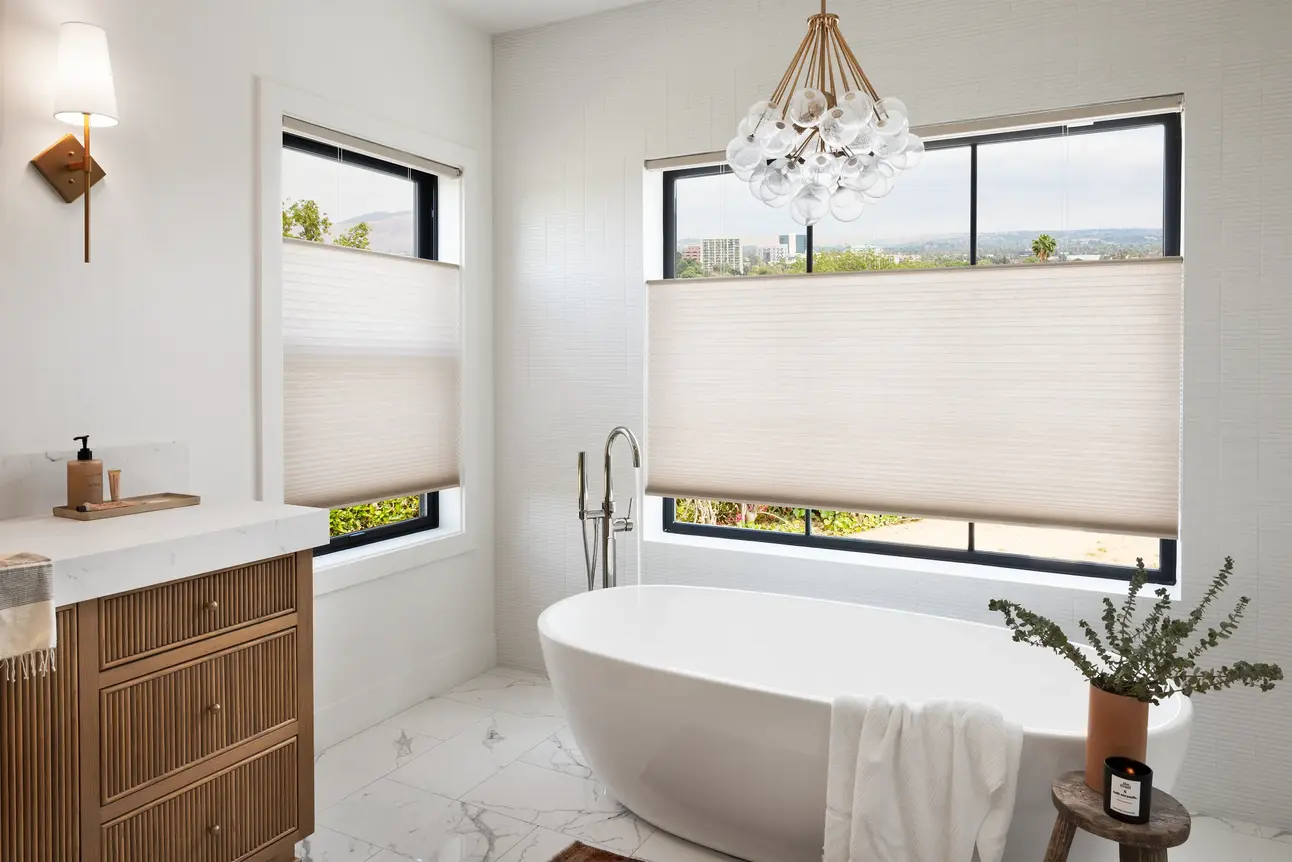
Your Cellular Shade choice depends on how much light control you need in each room. Light-filtering Cellular Shades soften natural light while maintaining daytime privacy. These work well in living areas where you want brightness without glare.
Blackout Cellular Shades block nearly all light, making them ideal for bedrooms or media rooms where darkness matters. When you pair blackout shades with Curtains, you create strong light control and complete privacy.
Think about how you use each room. For spaces with televisions or computer screens, light-filtering shades with heavier Curtains give you flexible control throughout the day. For sleeping areas, blackout shades with decorative Curtains deliver both darkness and style.
Single vs double cell construction
The honeycomb structure gives cellular shades their name and performance. Single-cell shades create one layer of air pockets, offering solid insulation at a lower cost. These work well in moderate climates where temperature swings are less extreme.
Double-cell construction builds two layers of air chambers, trapping more air between your window and room. This design delivers superior energy efficiency, especially valuable in areas with harsh winters or hot summers.
Cell size also affects appearance when layering. Smaller cells provide a refined, subtle look that works well under most curtain styles. Larger cells create more visual texture and work best when paired with simpler curtain fabrics. Choose cell sizes that support rather than compete with your curtain selection.
Mounting inside or outside the window frame
Your mounting choice affects both how your layered window treatments look and perform. Inside-mounted Cellular Shades fit within the window frame, creating a clean, built-in appearance that highlights your window trim. This approach allows curtains to frame the entire window opening for a polished look.
Outside-mounted shades extend beyond the window frame to cover the full window area. Choose this option for windows with shallow depth or to make windows appear larger. Outside mounting also reduces light gaps around the shade edges, improving privacy and light control.
Consider your Curtain hardware placement when selecting your mount type. For the most professional appearance, plan to install curtain rods 4-6 inches above the window frame and extend them 3-6 inches beyond each side of the window opening.
Add Curtains for Style and Function
After selecting your cellular shades, curtains complete the layered look while adding extra functionality. This combination turns standard windows into designer focal points.
Curtains over Cellular Shades: what works best
Lighter Curtains work best with Cellular Shades to avoid overwhelming your windows. Sheer or semi-sheer panels create an elegant layered effect without competing for attention. Structured drapery with pleated tops adds formal sophistication when you want a more dramatic look.
Neutral-colored Cellular Shades provide the perfect foundation for patterned or textured curtains. Tab-top or grommet-style curtains suit contemporary spaces, while pinch-pleated draperies complement traditional decor.
Choosing fabric weight based on room needs
Match fabric weight to your specific needs. Lightweight sheers soften light beautifully with minimal privacy ideal for living areas where you want diffused illumination. Medium-weight fabrics balance light filtering with privacy, perfect for multipurpose spaces.
Heavier fabrics like velvet or brocade provide maximum privacy, light control, and sound dampening. Choose these for bedrooms or street-facing windows where complete coverage matters most.
Curtain length and rod placement tips
Mount Curtain Rods 4-6 inches above window frames to create the illusion of height. Extend rods 3-4 inches beyond each window side for better light entry when curtains are open.
Floor-length curtains create the most sophisticated appearance. Let them hover slightly above the floor or "break" with a 1-2 inch puddle for an elegant finish.
Benefits of Layering Cellular Shades with Curtains
Cellular Shades and Curtains together deliver advantages that single window treatments cannot match. This pairing maximizes function and style throughout your home.
Improved Insulation and Energy Savings
The honeycomb structure of cellular shades traps air within its cells, creating natural insulation at your windows. Curtains add another thermal barrier against heat transfer. This dual-layer approach can reduce heat loss by up to 25% during winter months and block unwanted heat gain in summer. The combination works especially well for older windows or homes in extreme climates.
Better Light Control and Privacy
Layering gives you flexible control over light and privacy throughout the day. Adjust Cellular Shades for basic light filtering while using curtains to soften harsh sunlight further. Cellular Shades provide daytime privacy, while drawn Curtains create complete evening seclusion. This flexibility lets you create the right atmosphere for any activity or time of day.
Enhanced Room Appearance and Depth
Multiple window treatments create visual interest that single coverings cannot achieve. The layered effect adds texture and sophistication to your windows. This approach creates perceived depth, making rooms appear larger and more thoughtfully designed. Contrasting textures, crisp cellular shades with flowing curtain fabrics, create focal points that elevate any room.
Layering Ideas for Different Rooms
Not all rooms need the same balance of light control and privacy. Use these room-specific combinations to match your window treatments to how you actually use each space.
Bedroom: blackout shades with thick drapes
Pair blackout cellular shades with heavier drapes for bedrooms where sleep quality matters most. This combination blocks virtually all light penetration while creating ideal rest conditions. Start with double-cell blackout shades as your foundation, then add thick velvet or lined drapes that extend beyond the window frame. This pairing provides sound absorption that works especially well for street-facing bedrooms. Choose complementary colors rather than exact matches for a more sophisticated appearance.
Living room: light-filtering shades with sheer curtains
Living spaces work best with flexible light control throughout the day. Light-filtering Cellular Shades paired with Sheer Curtains create an airy, welcoming atmosphere that softens natural light while maintaining daytime privacy. Single-cell shades in neutral tones form an excellent foundation, topped with flowing sheers that diffuse sunlight beautifully. For a more structured look that preserves openness, consider pairing with lightweight Curtains instead.
Dining room: neutral shades with patterned curtains
Focus on visual interest without compromising function in dining areas. Start with neutral cellular shades that provide basic light filtering, then add personality through patterned curtains. This approach maintains the clean look of cellular shades while introducing color and texture through your curtain selection. Choose patterns that complement your dining furniture and overall décor -florals work well in traditional spaces while geometric designs suit contemporary rooms.
Avoiding Common Layering Mistakes
Even careful planning can't prevent every misstep when creating layered window treatments. These common mistakes can reduce the impact of your window treatments, but understanding them helps you achieve professional results.
Overlapping textures that clash
Textural balance between Cellular Shades and Curtains requires attention. Heavily textured fabrics paired with detailed cellular patterns create visual confusion. Balance textured cellular shades with smooth curtain fabrics instead. If your Curtains feature pronounced weaves or patterns, choose simpler Honeycomb Shades. The goal is contrast without conflict, each element should complement its partner rather than compete.
Improper spacing between layers
The distance between Cellular Shades and curtain rods affects the overall appearance. Allow 4-6 inches between the top of your cellular shade and curtain rod to avoid a cramped look. Curtain Panels need enough clearance to operate without catching on the shade. This proper spacing creates visual breathing room and preserves functionality for both treatments.
Choosing colors that compete instead of complementing
Mismatched colors can undermine your layering efforts. Select colors within the same temperature family, warm with warm, cool with cool. Consider cellular shades as your foundation and let curtains build upon that base. Neutral-colored cellular shades provide versatility when you want curtains to introduce color statements that connect to your room design.
Bring it all together
Layering Cellular Shades with curtains delivers both energy efficiency and design appeal that single window treatments can't match. This approach reduces energy costs through the honeycomb structure's insulation properties while adding the extra thermal barrier curtains provide.
You gain flexible light and privacy control throughout the day. Cellular Shades handle basic filtering or blackout needs, while curtains offer an adjustable layer for creating the right atmosphere in each room.
The visual results speak for themselves. This layering technique adds depth and dimension that makes windows appear larger and rooms more thoughtfully designed. Blackout shades with heavy drapes work perfectly for bedrooms, while light-filtering shades paired with sheers create welcoming living spaces.
Avoid texture conflicts, maintain proper spacing between layers, and choose colors that work together rather than compete. Quality cellular shades provide the foundation, and the right curtains complete the look.
This layered approach addresses multiple window treatment needs at once. Temperature control, light management, privacy, and style all improve when you combine these elements thoughtfully. Your windows will perform better while looking professionally designed.
Ready to explore custom Cellular Shades and professional installation? Schedule a free in-home consultation to see samples, discuss your specific needs, and create layered window treatments that enhance both comfort and style in your home.

.png?Status=Master&sfvrsn=837b23bd_1)
.png?Status=Master&sfvrsn=f55daebb_1)