.webp?Status=Master&sfvrsn=4df45337_4)

.png?Status=Master&sfvrsn=4c04cf13_1)
.png?Status=Master&sfvrsn=d5947d95_1)
.png?Status=Master&sfvrsn=2b1efdd1_1)
Layering Roman shades with curtains combines two popular window treatments to deliver both aesthetic appeal and practical benefits. Roman shades are soft fabric panels that fold neatly as they’re raised, offering a clean, tailored look. When paired with curtains, they provide enhanced privacy, insulation, and light control, while also allowing you to personalize your room's design.
Use this guide to layer Roman shades with curtains the right way by selecting materials, colors, mounting options, and functional features that work together. You will find clear strategies, examples, and expert tips on fabric and color pairings, plus how each component functions on its own and in tandem, so you can make confident choices for French doors with Roman shades, wide windows, or a cozy bedroom.
Key Takeaways for Layering Roman Shades With Curtains
- Layering Roman shades with curtains provides superior light control, privacy, and energy efficiency.
- Roman shades serve as the structured base layer, while curtains add softness, depth, and style.
- Pairing complementary colors, patterns, and textures enhances the overall room design.
- Installation techniques, including rod placement and hardware coordination, are essential for a polished finish.
- Avoid common mistakes such as clashing patterns, improper lengths, or over-layering with heavy fabrics.
- Motorized Roman shades offer convenience and are ideal for tall or hard-to-reach windows.
Why Layer Roman Shades With Curtains?
Combining Roman shades with curtains creates a multi-dimensional window treatment that serves both form and function. Alone, each treatment offers strong benefits. But when layered, they:
- Improve light filtration by offering dual-adjustment options
- Provide extra insulation for temperature regulation
- Enhance privacy, especially in bedrooms or street-facing rooms
- Create visual depth and elevate design aesthetics
- Offer flexibility for adjusting mood and light throughout the day
Whether your style is traditional, transitional, or modern, this duo offers timeless elegance and practical performance.
Roman Shades: A Functional Window Shade
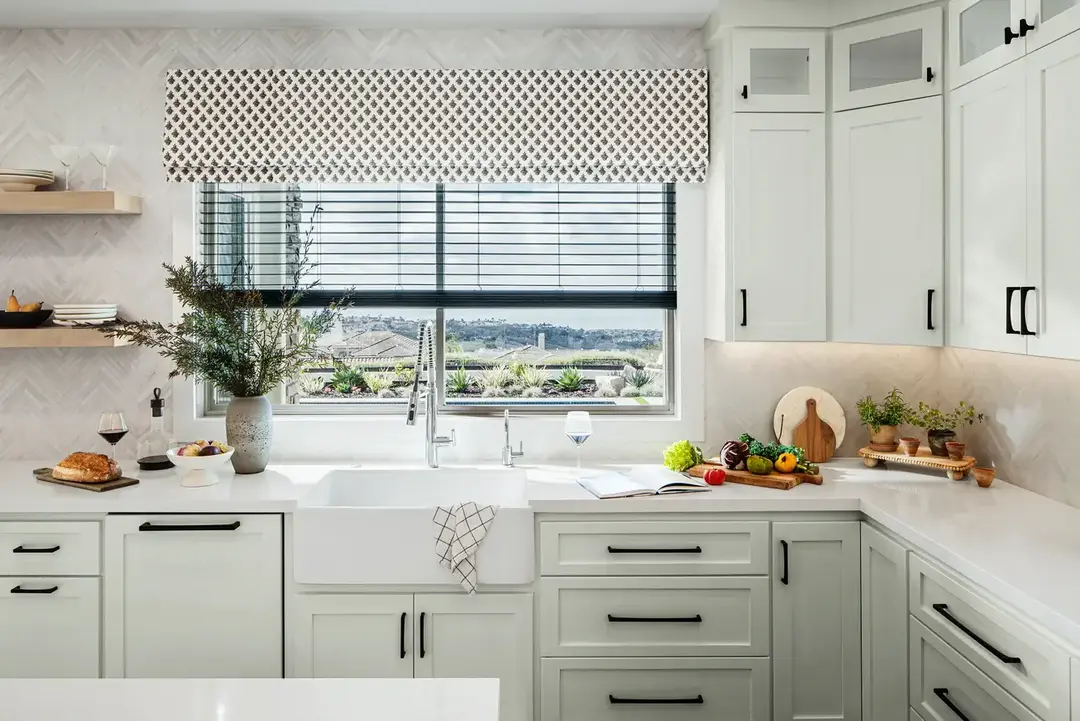
Roman shades act as the base layer. Their neat, folded design creates a soft architectural feel while sitting flush inside or just above the window frame. Roman shades come in a wide variety of fabrics, from light-filtering to blackout options, which makes them highly customizable.
They’re particularly effective in rooms where you need more tailored light control without bulky hardware. For example, light-filtering shades diffuse harsh sunlight in kitchens or living rooms, while blackout Roman shades are ideal for bedrooms and nurseries. Patterned or textured shades add visual interest beneath solid curtain panels.
You can browse custom Roman shades for an overview of material, color, and lining choices that form the base of your layered treatment.
Choosing Curtains That Complement Your Style
Curtains are the secondary layer, adding softness, scale, and function. The key to successful layering is making sure curtains complement, not compete with, the Roman shades.
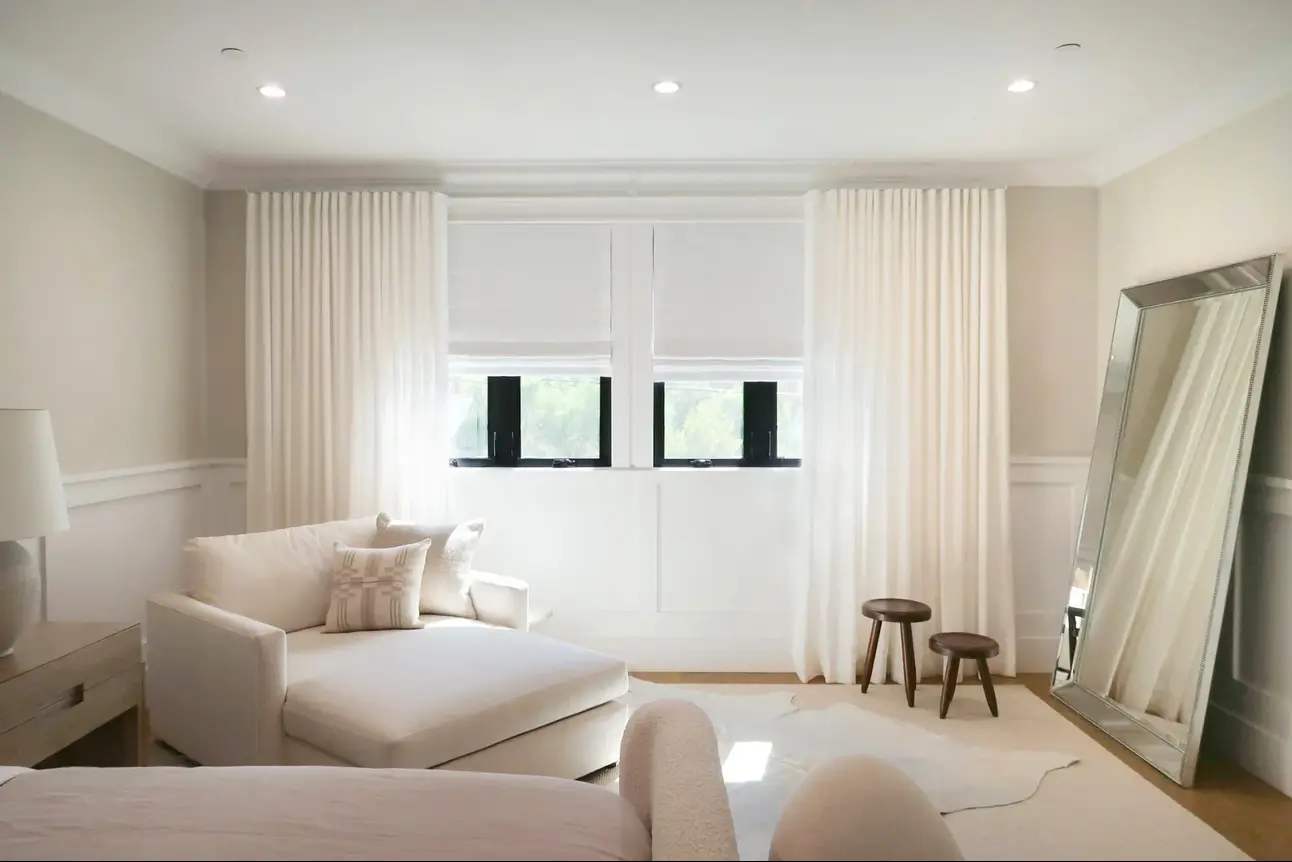
Popular pairings include linen curtains with relaxed Roman shades for an airy look, or velvet drapery panels over crisp flat shades for a more formal, luxurious style. If you prefer a light and layered effect, sheer panels over lined hobbled shades offer both softness and structure.
Best Combinations by Room Type
Each room has different demands. Use these room-by-room suggestions to match function with style:
- Living Room: Light-filtering Roman shades with patterned linen curtains allow filtered daylight during the day and full privacy at night.
- Bedroom: Blackout Roman shades with thick drapes ensure total darkness for sleep and added insulation.
- Dining Room: Patterned Roman shades with solid silk or cotton curtains elevate formality while allowing mood lighting.
- Nursery or Media Room: Motorized blackout Roman shades with blackout-lined curtains offer complete light blocking and smart-home convenience.
Matching Color, Pattern, and Texture
Layered window treatments give you an opportunity to create harmony or contrast in your color palette. Stick to the same color family for a monochromatic look, but vary textures to add depth. If your Roman shades have a busy print, balance with solid-colored curtains. If your curtains have a bold motif, pair with neutral Roman shades.
Pair smooth, structured shades with plush curtains for balance. Flat-fold cotton shades beneath velvet panels create an upscale yet approachable style.
What Color Should Your Curtains Be?
Choosing curtain color is about balance, undertones, and context. Use this simple framework to decide:
- Match the wall for a calm, cohesive backdrop. Choose a shade one to two tones lighter or darker than the wall to avoid a flat look.
- Pull from the sofa or bedding to create a deliberate connection. Repeat that color in two or three small accents like pillows or throws.
- Go neutral when your Roman shade has a strong pattern. Warm whites, greige, taupe, or oatmeal let the texture do the work.
- Add contrast if the room needs definition. Darker curtains can frame light walls and make the windows read taller and wider.
- Mind the undertone. Keep warm with warm and cool with cool so fabrics do not fight the paint and flooring.
- Consider light. South and west facing rooms intensify color. North light can mute cool tones, so slightly warmer neutrals can help.
Quick formulas
- 60 30 10 rule. Walls and large surfaces are 60 percent, main textiles like sofa and curtains are 30 percent, accents are 10 percent.
- Tone on tone. Wall, curtain, and shade all in the same hue family with small shifts in depth for a layered, designer look.
Quick Answers: Curtain Color
Should curtains match the wall color?
Often yes for a serene look. Use a neighboring tone on the paint swatch strip rather than the exact match to keep depth.
Should curtains match the sofa or bedding?
They do not need to, but repeating a sofa or duvet color in the curtains creates unity. Add two more touches of that color in the room for balance.
Installation Tips for Layered Blinds and Curtains
To ensure a seamless look with layered blinds and curtains, it’s important to focus on proper mounting and alignment. Here’s what to keep in mind:
- Roman Shade Mounting: Inside mount is best for a sleek, built-in look and easy curtain layering. Outside mount works well for covering molding or light gaps.
- Curtain Rod Positioning: Hang rods 6 to 12 inches above the window frame to add height. Extend rods 4 to 6 inches beyond each side of the frame to let curtains fully open without blocking light. Choose sturdy rods that support layered drapery and complement shade hardware.
- Coordination: Match hardware finishes to other room accents like brass, matte black, or brushed nickel to ensure a cohesive look.
Light Control and Privacy Benefits
Layered window treatments are not just pretty. They are purposeful. Raise Roman shades fully and close sheers for diffused light. Or lower light-filtering shades and tie back curtains for ambient lighting.
Motorized Options for Modern Windows
For a modern home, motorized Roman shades offer convenience, security, and energy savings, especially when layered beneath curtains.
Battery-powered or wired options allow you to control shades remotely or via smart home devices like Alexa and Google Assistant. Automate your morning and evening routines by scheduling your shades to raise or lower at set times.
This tech-enhanced setup is ideal for tall windows or wide window banks and preserves a clean aesthetic. Explore motorized window treatments for more smart shading solutions.
Professional Design Tips for a Cohesive Look
To achieve a polished layered window treatment, consider the following design principles:
- Symmetry is key. Even spacing and balance keep the design intentional.
- Vary material weight. Use light curtains over heavier Roman shades or vice versa.
- Reinforce your color story. Echo curtain and shade colors in pillows, rugs, or accent decor.
- Test in natural light. Fabrics shift tone throughout the day.
- Mount curtains high. This draws the eye upward and visually enlarges the space.
Common Mistakes to Avoid When Layering
Even well-intended layering can fall flat when key mistakes are made. Here are common pitfalls to avoid:
- Competing Patterns: Busy Roman shade prints paired with bold curtain designs create visual chaos. Choose one element to carry the pattern and let the other stay neutral.
- Incorrect Curtain Length: Curtains that hover above the floor or bunch unevenly break the elegance. Aim for a clean floor-length or subtle puddle.
- Too Much Weight: Heavy shades with thick drapery may look overbearing. Balance textures and weights for a more breathable look.
- Improper Rod Placement: Hanging rods too low shrinks the window. Mount rods high and wide to expand the visual height and width.
- Lack of Lining: Unlined curtains may look cheap and reduce insulation. Choose lined panels for a professional, finished look.
Design Scenarios for Inspiration
Not sure where to start? These scenarios show proven combinations for different rooms so you can visualize the result and customize with your own colors and materials.
| Scenario | Base Layer (Shade) | Curtain Layer | Why it Works |
|---|---|---|---|
| Moody, Elegant Bedroom | Flat-fold in deep charcoal, light-blocking | Emerald velvet, full length, mounted high | Full blackout for sleep, rich contrast, and a cocoon-like feel with vertical emphasis |
| Coastal Living Room | White light-filtering inside mount | Sky-blue linen that just kisses teh floor | Airy daylight diffusion, relaxed texture, and a bright, beach-inspired palette |
| Contemporary Dining Area | Geometric pattern, medium opacity | Solid matte panels in a coordinating neutral | Pattern takes center stage, curtains calm the look, and the pair manages glare for evening meals |
| Classic Entry or Hall | Neutral textured shade inside mount | Tailored pinch-pleat panels in a tone-on-tone hue | Clean lines keep traffic areas tidy while panels add polish without visual clutter |
Use this quick reference to compare layered window treatments at a glance. It outlines the shade, curtain, and design rationale for each scenario to help you choose the right look for your space.
Layering Curtains with Roman Shades: Final Guidance
Layering Roman shades with curtains is one of the most effective ways to create a beautiful, functional window treatment. From better light control and insulation to a custom, curated design, this approach brings together the best of both worlds.
Start with the right base shade, select complementary curtains, and follow expert tips for measurement, fabric pairing, and hardware installation. Whether you're refreshing a single room or redesigning your whole home, layered window treatments offer an upgrade that is equal parts smart and stunning.
For expert help pairing custom Roman shades with curtains, schedule a free in-home consultation and let our design specialists bring your vision to life.

.png?Status=Master&sfvrsn=837b23bd_1)
.png?Status=Master&sfvrsn=f55daebb_1)