.webp?Status=Master&sfvrsn=4df45337_4)

.png?Status=Master&sfvrsn=4c04cf13_1)
.png?Status=Master&sfvrsn=d5947d95_1)
.png?Status=Master&sfvrsn=2b1efdd1_1)
Key Takeaways
Finding the right sliding glass door window treatments means matching your specific needs with products that deliver on both style and function.
What to consider before choosing window treatments for sliding glass doors: Think about your privacy needs, desired light control, room function, and how your sliding door opens and closes to guide your decision.
Choose treatments based on your primary functional goal: Whether you want better energy efficiency, enhanced privacy, or easier daily operation, select options designed to meet those specific needs.
Select window coverings designed for sliding glass doors: Options like Vertical Blinds, Roller Shades, Cellular Shades, Shutters, and Drapery provide the right balance of access, light control, and style.
Match your window treatments to your home’s design style: Modern spaces benefit from clean, minimal options, while traditional or rustic interiors pair well with layered fabrics and natural textures.
Pick materials that support both performance and style: Fabric treatments offer softness and flexibility, while hard and structural materials deliver durability, easy maintenance, and added insulation.
Getting installation and maintenance right: Proper measuring, mounting (inside vs. outside), and choosing cordless or motorized options ensure smooth operation, safety, and long-term performance.
What to Consider Before Choosing Window Treatments for Sliding Glass Doors
Are you looking at your sliding glass doors, wondering how to balance style with practical needs? Before you commit to any window treatments for sliding glass doors, several key factors will guide your choice and help you find sliding door window treatments that actually work for your space.
Privacy Needs and Light Control Options
Your privacy needs can shift throughout the day, especially with large sliding glass doors. You may love natural light filling the room in the morning, but want more coverage and comfort in the evening. Light-filtering treatments help soften sunlight and reduce glare, while room-darkening options block most incoming light when you need added privacy. So which do you pick?
If flexibility is important, look for options that let you easily adjust light and privacy throughout the day. Vertical Blinds and Shutters allow you to tilt slats or louvers to your preferred level. Vertical Cellular Shades with DuoShade take it a step further, combining different opacities on the same shade so you can enjoy light filtering on one side and more coverage on the other.
Layered solutions are another great choice. Dual Roller Shades pair a sheer and opaque fabric so you can switch between them as needed. For a more elevated look, consider pairing Drapery with Shades or Blinds to add both versatility and a polished finish.
Room Function and Traffic Patterns
The room your sliding doors are in should guide your choice, especially when it comes to traffic and daily use. High-traffic areas like family rooms or kitchens need treatments that can keep up. Vertical Blinds, Faux Wood Shutters, Motorized Roller Shades, and Vertical Cellular Shades are all great options here, offering durability, smooth operation, and added energy efficiency, especially helpful with kids or pets coming and going.
Dining rooms, on the other hand, tend to be lower traffic, so you can lean more into style. Since you’re less likely to adjust them throughout the day, Horizontal Sheer Shades, Zebra Shades, or light-filtering drapery work beautifully to provide privacy during meals while creating a soft, inviting atmosphere.
Bedrooms may not see as much foot traffic through the door, but the treatments themselves get used often. That makes it important to choose options that are both functional and visually appealing. Room-darkening Cellular Shades, blackout Roller Shades, or layered drapery help create a restful space while still looking polished.
Door Operation and Opening Direction
Think about how easy your window treatments are to use day to day; that matters just as much as how they look. Sliding glass doors work best with treatments that move the same way. Vertical Blinds and Vertical Cellular Shades glide side to side, making them a natural, easy fit. Other options, like Solar Shades, need to be fully raised before you can open the door.
It’s also worth considering how the treatments stack when open. Larger stacks can slightly cover part of the doorway if placement isn’t planned carefully. For wider or taller doors, motorization can make a big difference, no tugging or adjusting needed. You can even use the 3 Day Blinds Motorization app to schedule your shades to open when you’re coming and going, then close automatically at night for added privacy.
Existing Décor and Style Preferences
Your current interior design should guide your treatment selection. With hundreds of fabric colors, patterns, and textures available, you can find window coverings that truly complement your space. Vertical blinds may feel too office-like for some homes, while shutter-style panels create more of an architectural statement.
Not sure what will look best? A 3 Day Blinds design consultant will bring a showroom’s worth of samples right to your home, so you can see, touch, and compare options in your own space and lighting before making a decision.
Sliding Glass Door Treatments for Different Functional Goals
Your specific needs determine which treatments work best for your sliding doors. Whether you prioritize energy savings, easy operation, or complete privacy, certain options excel in each area.
Creating Maximum Privacy
Blackout Blinds and Shades for sliding glass doors are designed to block most incoming light and provide a high level of privacy, making them a great choice for bedrooms and media rooms where a darker environment is important. Room-darkening fabrics offer a softer level of light control while still reducing visibility from outside. For added comfort, certain fabrics and liners can also help improve insulation and manage heat gain across large glass door openings.
If your privacy needs change throughout the day, look for sliding door treatments that offer flexible control without sacrificing style. Dual Roller Shades let you switch between a sheer and room-darkening fabric, while Zebra Shades allow you to adjust light by aligning solid and sheer bands. Horizontal Sheer Shades soften natural light while still giving you privacy when tilted closed. For sliding doors, Vertical Cellular Shades with DuoShade offer added versatility by combining different opacities within the same shade for customized light control.
Energy-Efficient Options for Temperature Control
Large sliding glass doors can be a major source of heat gain and loss, so choosing the right window treatment can make a noticeable difference in comfort. Cellular Shades are one of the most effective options, thanks to their honeycomb design that helps trap air and create a layer of insulation at the window.
For sliding glass doors, Vertical Cellular Shades are a smart choice. They offer the same insulating benefits as traditional cellular shades, but are designed to glide side to side for easy operation. This makes them ideal for larger openings where maintaining indoor temperature can be more challenging.
These energy-efficient options can help keep your home cooler in the summer and warmer in the winter, all while reducing strain on your HVAC system. It’s a simple upgrade that improves comfort in the spaces you use most.
Simple Operation for High-Traffic Areas
Motorization solves the challenge of operating tall, heavy treatments, while Vertical Blinds slide open and closed with minimal effort, and wand-controlled options require no explanation for guests.
Consider how often you'll operate your treatments and who else in your household needs to use them. Simple mechanisms prevent frustration and ensure your treatments actually get used.
Low-Maintenance Solutions for Busy Households
Vertical blinds collect less dust due to their vertical slat design. You can replace damaged slats individually, extending their lifespan. Faux Wood Shutters feature easy-to-clean materials that wipe down quickly.
If cleaning and maintenance feel like chores you'd rather avoid, these options keep your sliding doors looking good with minimal effort.
Window Covering Options That Work for Sliding Glass Doors
Each type of sliding door window treatment excels in different situations. Your choice depends on whether you prioritize energy efficiency, easy operation, or specific style preferences for your space.
Vertical Blinds for Reliable Daily Use
Vertical Blinds are a natural fit for sliding glass doors since they move side to side just like the door itself. The vanes rotate for light and privacy control, then stack neatly out of the way for full access. Available in vinyl and fabric options, they’re a reliable choice for high-traffic areas that need something durable and easy to use.
Vertical Cellular Shades for Energy Efficiency
Vertical Cellular Shades combine smooth operation with enhanced insulation, making them ideal for large glass doors. Their honeycomb design helps maintain a more comfortable indoor temperature, while the side-to-side movement keeps everyday use simple. Options like DuoShade add even more flexibility with varying levels of light control.
Solar Shades for Glare Reduction and View Preservation
If your sliding doors get a lot of direct sunlight, Solar Shades are a great solution. They help reduce glare and block UV rays while still maintaining your view to the outside. This makes them especially popular in living rooms or home offices where you want natural light without the harsh brightness.
Shutters for Structure and Style
Bypass shutters slide past each other on tracks, while bi-fold panels fold accordion-style against the wall. The adjustable louvers tilt for precise light control without requiring cords or complex mechanisms.
Real wood shutters bring natural warmth and traditional appeal, while faux wood options resist moisture and warping in humid conditions. Both styles add architectural interest and can increase your home's value.
Drapery for a Layered, Finished Look
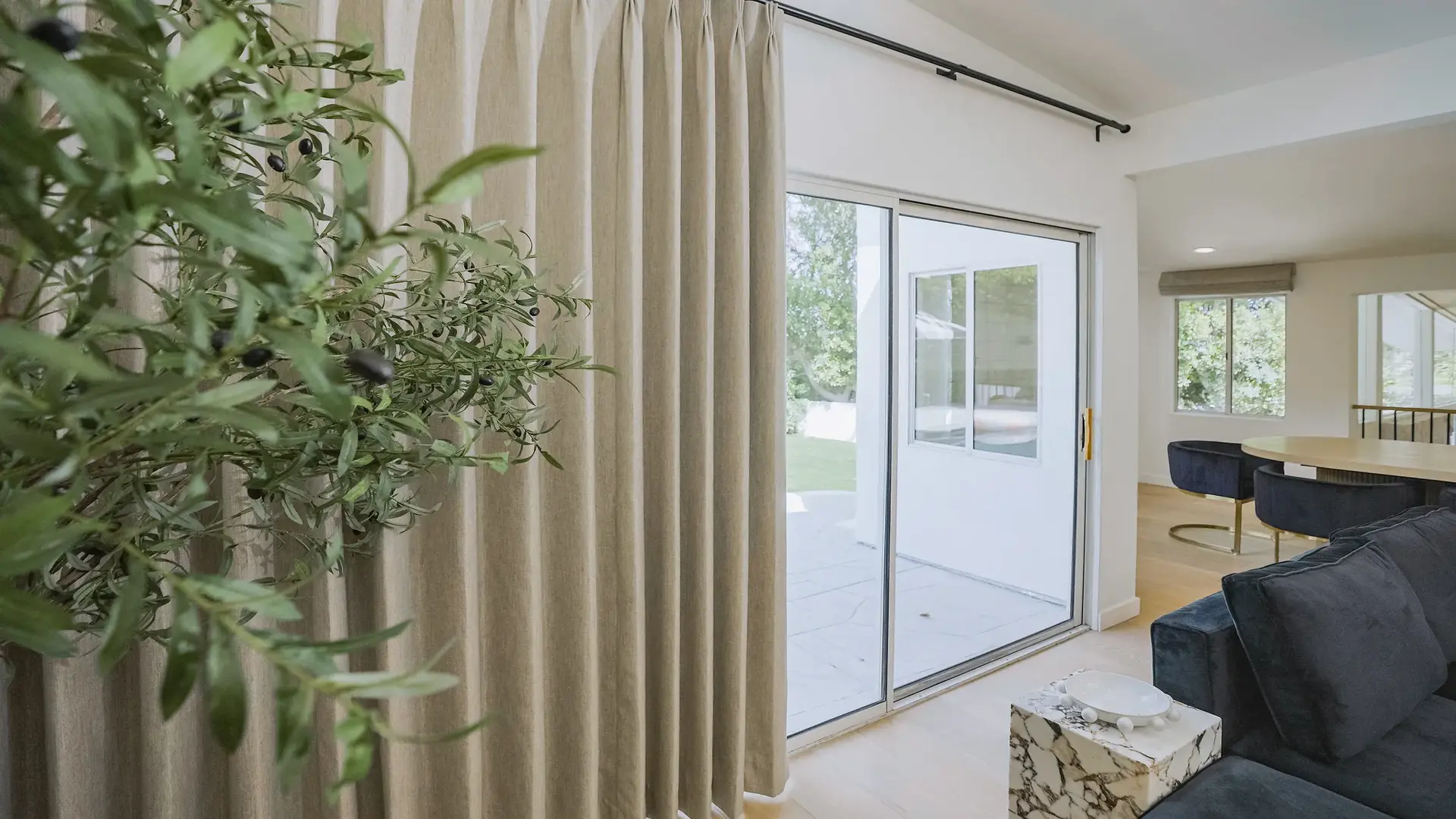
Fabric panels provide warmth and sophistication through various hanging styles including ring top, grommet, and pleated headers. Panels can stack to one side or split to both sides, depending on your door configuration and room layout.
Add room darkening liners for bedrooms or thermal liners to improve insulation and energy efficiency. The wide range of fabric choices ensures you can match any interior design style while maintaining smooth door operation.
Matching Window Treatments to Your Home's Style
Your home's architectural character guides which treatments will look intentional rather than out of place. Whether you lean toward clean lines, classic elegance, or natural textures, the right choice creates visual harmony that feels effortless.
Contemporary and Minimalist Homes
Clean lines and simple operation work best in modern spaces. Roller Shades and Solar Shades offer a sleek, low-profile look that fits beautifully over sliding glass doors. For larger openings, Vertical Cellular Shades provide a streamlined appearance while still delivering easy side-to-side operation. Stick with neutral tones or subtle textures to keep the space feeling open and uncluttered.
Traditional and Classic Interiors
For a more timeless look, Custom Drapery is a natural fit. Rich fabrics, pleated styles, and layered designs add warmth and elegance while still allowing for smooth operation across sliding doors. You can pair drapery with shades for added light control and versatility, creating a polished, finished feel that works well in formal living or dining rooms.
Rustic and Natural Design Themes
Spaces with a more relaxed, organic style benefit from texture and natural materials. Woven Wood Shades bring in warmth and dimension, while Linen Curtains or textured fabrics softens the look and adds an easy, lived-in feel. These options work well on sliding glass doors when you want to maintain a casual, inviting atmosphere without sacrificing function.
By matching your window treatments to your home’s style, you create a cohesive look that feels both functional and thoughtfully designed.
Getting Installation and Maintenance Right
Accurate measurements make the difference between window treatments that look professional and those that appear haphazard. Start by measuring your sliding glass door width at three points: top, middle, and bottom. Record the largest measurement and add 2 to 4 inches for adequate light coverage. For height, measure from your planned headrail placement (typically 2 to 3 inches above the door) down to your desired end point. Take three height measurements and use the largest. A steel tape measure gives you more precision than cloth, and round to the nearest 1/8 inch.
How to Measure Sliding Doors for the Best Fit
Measuring for sliding glass door window treatments can be more challenging than it looks. Large openings, wide spans, and mounting considerations all leave room for small errors that can impact how your treatments look and function. While you can take basic measurements by checking width and height in multiple spots, getting a precise fit often requires careful planning.
That’s where 3 Day Blinds makes it easy. Our design consultants come to your home, take detailed measurements for you, and ensure everything is designed to fit your space perfectly. We also handle professional installation, so your window treatments operate smoothly from day one without the guesswork.
Cleaning Tips for Different Treatment Types
Once your treatments are in place, a little regular care goes a long way in keeping them looking and performing their best. Simple upkeep like light dusting or occasional spot cleaning can help extend their lifespan. For more detailed guidance based on specific products, explore our full maintenance and care guide to keep your window treatments in top shape.
Find the Best Fit for Your Sliding Glass Doors
The right sliding glass door treatments transform both function and aesthetics in your home. By considering privacy needs, room function, and existing décor, you'll narrow down options that work seamlessly with your lifestyle. Whether you choose vertical blinds for classic reliability, cellular shades for energy savings, or elegant drapery for traditional charm, proper measurement and installation ensure smooth operation and lasting satisfaction. When you're ready to see these options in your own space, schedule a free, no-obligation, consultation and let our design experts help.

.png?Status=Master&sfvrsn=837b23bd_1)
.png?Status=Master&sfvrsn=f55daebb_1)