

.png?Status=Master&sfvrsn=4c04cf13_1)
.png?Status=Master&sfvrsn=d5947d95_1)
.png?Status=Master&sfvrsn=2b1efdd1_1)
By Mary-Kate Flannery, Appointment Sales Supervisor at 3 Day Blinds and former In-Home Design Consultant, 15+ years of interior design experience
Choosing the right window treatment is part function, part style, and the Roller Shades vs. Cellular Shades question is one I get more than almost any other. Both are excellent choices, but they solve different problems, and the right pick depends on your room, your climate, and what you're really trying to fix. This guide walks through the key differences based on what I see working, and not working, in real homes every day.
Brief Overview
As a former In-Home Design Consultant at 3 Day Blinds, I've spent five years measuring, recommending, and following up on window treatments in real homes, and I've learned that this decision is rarely about the product on paper. Here's the short version: Roller Shades give you a sleek, low-profile look with flexible light control, while Cellular Shades trade a little simplicity for serious energy efficiency and sound dampening. Most people lean one way the moment they describe their room. The rest of this guide is about confirming which way that is.
Key Highlights
- Roller Shades win on clean design, day-to-day light flexibility, and easy maintenance.
- Cellular Shades win on insulation, temperature comfort, and noise reduction, thanks to their honeycomb structure.
- Both come in light-filtering to room-darkening fabrics, and both can be motorized.
- The deciding question is usually the room's primary challenge: aesthetics and light, or comfort and energy.
Roller Shades vs. Cellular Shades: A Quick Comparison
| Feature | Roller Shades | Cellular Shades |
|---|---|---|
| Design | Clean, streamlined fabric panel with a modern appearance | Soft, textured honeycomb design with added depth |
| Light Control | Highly dependent on fabric selection, from sheer to room-darkening | Diffused natural light with light-filtering and room-darkening options |
| Energy Efficiency | Helps reduce glare and solar heat gain | Superior insulation thanks to honeycomb air pockets |
| Privacy | Varies by fabric openness and opacity | Excellent privacy while still allowing natural light in many fabrics |
| Noise Reduction | Minimal | Helps absorb and soften outside noise |
| View Preservation | Available with solar and sheer fabrics that maintain outside views | Prioritizes privacy and light diffusion over view-through visibility |
Compare Roller Shades and Cellular Shades based on design, light control, insulation, privacy, noise reduction, and view preservation.
What Are Roller Shades?
Roller Shades are a single piece of fabric that rolls onto a tube for a clean, streamlined look. They come in everything from sheer to near blackout, suit both modern and traditional interiors, and integrate easily with motorization and smart-home systems.
What Are Cellular Shades?
Cellular Shades, also called Honeycomb Shades, are built around a cell structure that traps air to insulate your windows. Available in single, double, and jumbo-cell configurations, they're the go-to when energy efficiency, privacy, and a soft, tailored look are the priorities. For a deeper walkthrough, read our guide on choosing Cellular Shades.
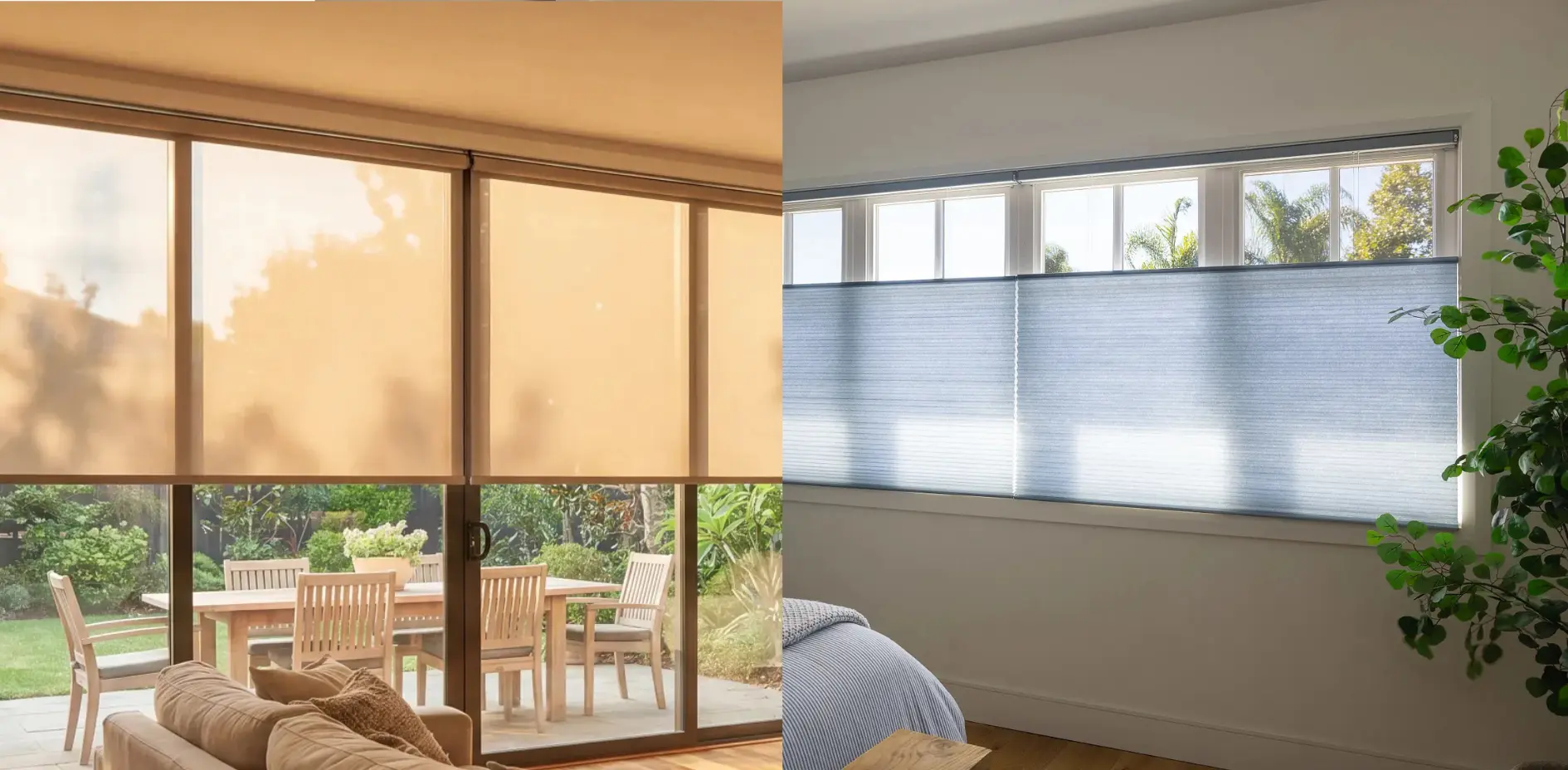
The biggest difference between Roller Shades and Cellular Shades is how they manage light.
A Roller Shade uses a single sheet of fabric that raises and lowers as one continuous panel. This simple construction creates a clean, modern look and leaves the window largely unobstructed when the shade is raised. Light control and privacy depend primarily on the fabric you select, from sheer materials that preserve daylight to room-darkening fabrics designed for greater privacy and glare reduction.
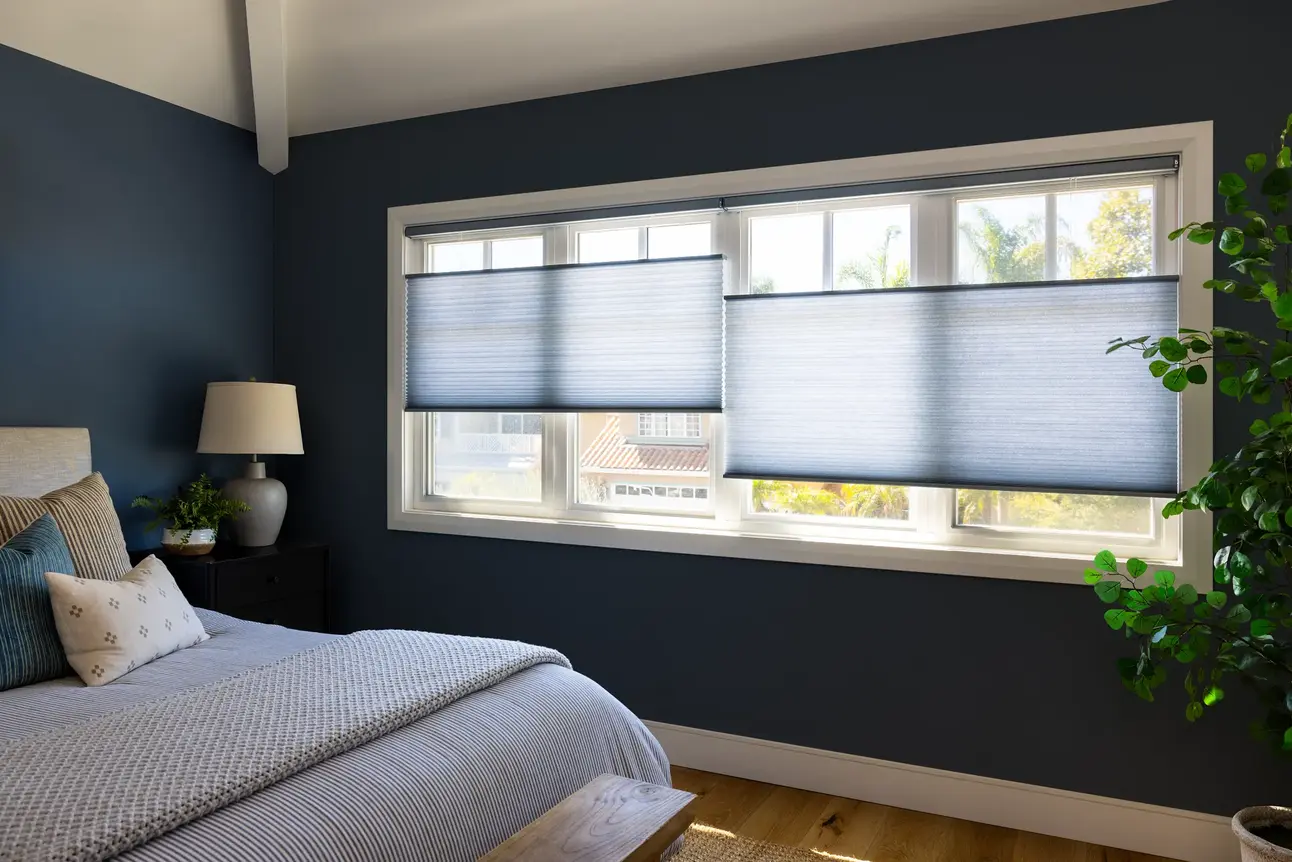
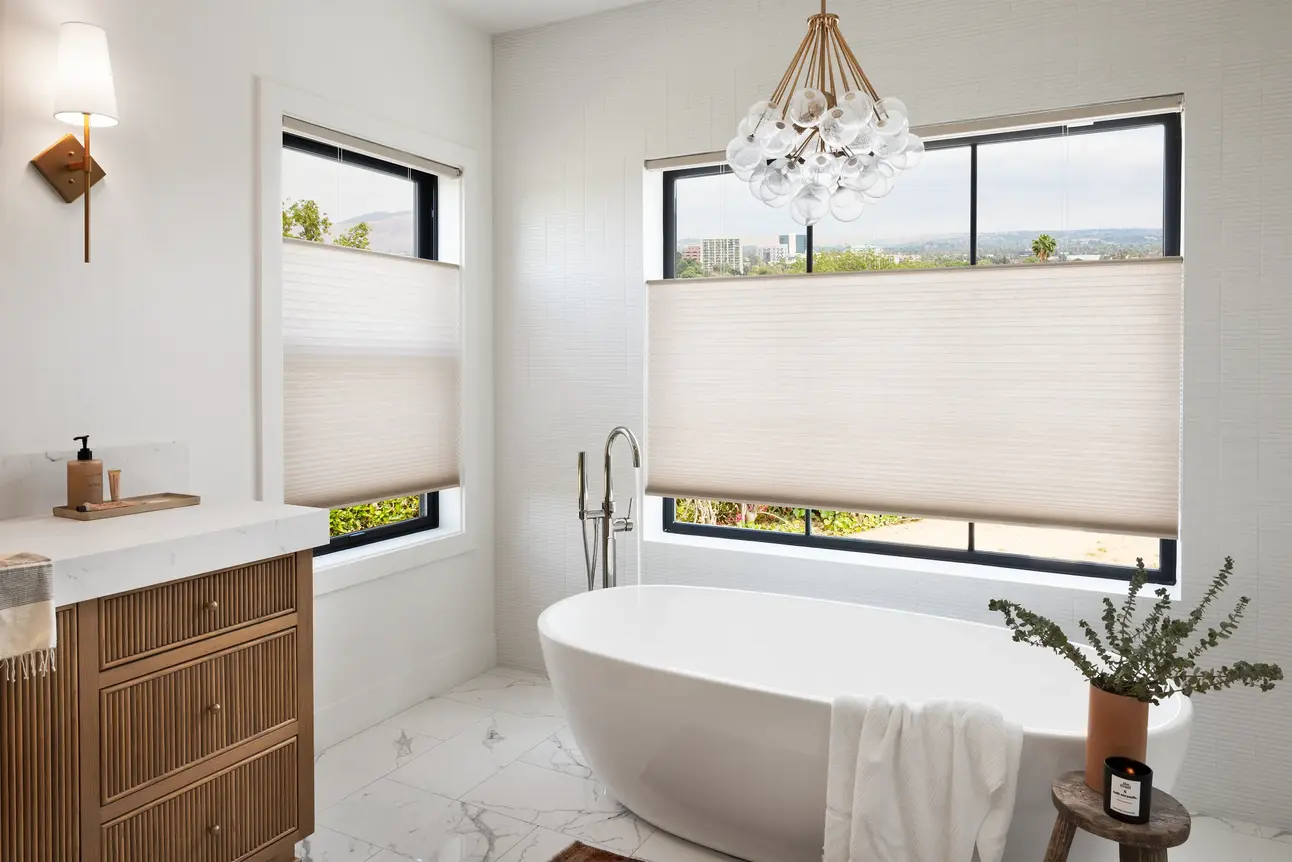
Cellular Shades use a honeycomb-shaped fabric structure that creates built-in air pockets across the window. Instead of simply blocking or filtering light, the cells help distribute daylight more evenly throughout the room while maintaining privacy. This same construction also provides added insulation and can help soften outside noise, making Cellular Shades a popular choice for bedrooms, living spaces, and other areas where comfort is a priority.
In short, Roller Shades prioritize simplicity, clean lines, and fabric-driven light control, while Cellular Shades combine light filtering, privacy, insulation, and comfort in a single window treatment.
Insulation and Energy Efficiency
This is the category where Cellular Shades earn their reputation. The honeycomb cells trap air within the shade, creating an insulating barrier that helps reduce heat loss in winter and heat gain in summer. Homes with large windows, older windows, or rooms that receive significant sun exposure often see the greatest comfort benefits, and double-cell designs can provide even greater insulation.
Roller Shades can still help manage sunlight and glare, particularly when paired with fabrics designed for enhanced light control, but they do not provide the same insulating properties as Cellular Shades.
In many homes, the comfort difference is most noticeable in rooms with direct sun exposure or challenging temperatures. Cellular Shades help moderate indoor temperatures while also softening incoming light, making them a popular choice when energy efficiency and year-round comfort are top priorities. If improving comfort is a primary goal, Cellular Shades are often the stronger option.
Style and Design Options
Both shade types come in a wide range of colors and finishes, so the choice is rarely about whether you can match your décor. It's about the look you want.
Roller Shades bring clean lines and an uncluttered, contemporary feel. Their fabric range (sheer to room-darkening) makes them flexible for living rooms and kitchens where light diffusion matters, and they're easy to keep uniform across different window sizes throughout a home.
Cellular Shades add texture and depth, with options that go beyond aesthetics: single, double, and jumbo cell constructions for different insulation levels; light-filtering to room-darkening fabrics; customizable shapes and sizes for unusual windows; and a cozy, tailored look that still reads modern. They're a natural fit when you want the treatment to do something, like buffer noise or hold temperature, while looking good.
Care and Cleaning
Cleaning. Roller Shades are the easier of the two: a microfiber cloth or a vacuum brush attachment keeps them looking new, and their durable fabrics hold up well in high-traffic rooms. Cellular Shades take a little more attention. Dust the cells regularly with a feather duster or brush attachment, and spot-clean stains with a damp cloth (test a hidden area first).
Maintenance tips for longevity. One thing I always tell clients at the end of a consultation: the easiest way to keep both shade types looking great is to build two habits: (1) dust them regularly, and (2) raise them gently. Most premature wear I've seen comes from yanking on the fabric or letting dust embed in the cells. For Cellular Shades specifically, periodically checking the lift mechanism keeps the operation smooth over the years.
Motorization and Smart Home Options
Both Roller Shades and Cellular Shades can be motorized for control by remote, app, or voice, and both integrate into smart-home systems. Beyond convenience, scheduling shades around sunrise and sunset helps manage natural light and reduces reliance on artificial lighting and HVAC. With Cellular Shades, motorization pairs naturally with their insulating cells for an extra layer of energy management. Explore our full range of motorized window treatments to see what fits your setup.
Child Safety and Cordless Options
For families with young children or pets, cordless and motorized designs eliminate dangling cords, a meaningful safety upgrade, without compromising style or operation. Both Roller Shades and Cellular Shades are available cordless, and motorization removes cords entirely while adding everyday convenience. It's worth discussing these options during an in-home consultation so the safety choice fits the room.Pros and Cons at a Glance
Roller Shades. Pros: sleek minimalist design, flexible light control from sheer to room-darkening, easy maintenance. Cons: less insulation than Cellular Shades.
Cellular Shades. Pros: superior energy efficiency, sound absorption, textured depth, strong privacy and light diffusion. Cons: slightly more care.
Best Rooms for Each
After years of in-home design consultations, here's the room-by-room fit I keep coming back to.
Roller Shades are my go-to wherever you want clean lines, easy light adjustment through the day, and a treatment that visually disappears when raised:
- Living rooms, for flexible daytime light and an uncluttered look
- Kitchens, where easy-clean fabrics handle steam and splatter
- Home offices, for glare control on screens without going fully dark
- Modern or minimalist spaces, where the shade isn't meant to be the statement
- Bedrooms, too, when you choose blackout or room-darkening fabrics for nighttime privacy
Cellular Shades are what I recommend first wherever temperature control or sound dampening matters:
- Bedrooms, for blackout comfort plus insulation
- Nurseries, where light control and a quiet room help with sleep
- Rooms over a garage or facing north, where a double-cell configuration's insulation earns its keep
- Urban-facing rooms, where the acoustic buffer is something clients genuinely notice
If you're unsure, my honest advice: don't decide until you've seen real fabric samples in the room with your actual lighting. That's exactly what a free in-home design consultation is for.
Which One Is Right for You?
It comes down to three questions: What's the room's primary challenge? What's your aesthetic priority? And how much does energy performance factor into your budget?
Choose Roller Shades if you want a sleek, low-profile look; your priority is flexible light control through the day; you're outfitting a modern or minimalist space; or you want a simple, low-maintenance solution.
Choose Cellular Shades if heating and cooling costs are a concern; the room runs too hot, too cold, or too loud; you have young children or light-sensitive sleepers; or you want a treatment that works harder than just blocking light.
"After years of in-home consultations, I've found most clients already know the answer before we finish talking. They just need someone to confirm it. If the first thing you mentioned was 'I want it to look clean and simple,' that's a Roller Shade. If it was 'this room is freezing in winter' or 'I can't get my kid to sleep,' that's a Cellular Shade. The product is just the solution to the problem you already have."
Mary-Kate Flannery, Appointment Sales Supervisor and former In-Home Design Consultant, 3 Day Blinds
Still on the fence? That's exactly what our design consultants are for. A free in-home consultation lets you see both options in your actual space with real fabric samples, and the right choice usually becomes obvious within minutes.
.png?Status=Master&sfvrsn=837b23bd_1)
.png?Status=Master&sfvrsn=f55daebb_1)