.webp?Status=Master&sfvrsn=4df45337_4)

.png?Status=Master&sfvrsn=4c04cf13_1)
.png?Status=Master&sfvrsn=d5947d95_1)
.png?Status=Master&sfvrsn=2b1efdd1_1)
Key Takeaways
Bay windows bring architectural beauty to your home, but their three-panel design and angled projection require thoughtful planning to get both function and style right.
- Start by identifying your bay window configuration - angled bays at 30° or 45°, curved bow windows, and box bays at 90° each need different hardware and window treatment approaches.
- Match treatments to your priorities - cellular shades excel at energy efficiency, shutters deliver lasting elegance with superior light control, while roller shades create clean, modern lines.
- Mounting method affects both look and function - inside mount gives you a built-in appearance but requires adequate depth, while outside mount makes windows look larger and works when space is tight.
- Decide between individual coverage or continuous treatments - separate treatments for each panel offer flexibility and work with sharp angles, while continuous options create unified style across straight sections.
- Professional measuring prevents frustration - bay window angles and curves often need specialized brackets and precise measurements to ensure treatments fit properly and operate smoothly.
- Budget matters - roller shades and mini blinds are often more budget-friendly, while shutters and custom drapery are typically more of a long-term premium investment.
The right bay window treatments balance your room's style goals with practical needs like privacy, light control, and the unique installation challenges these beautiful windows present.
Understanding Bay Windows: Types and Characteristics
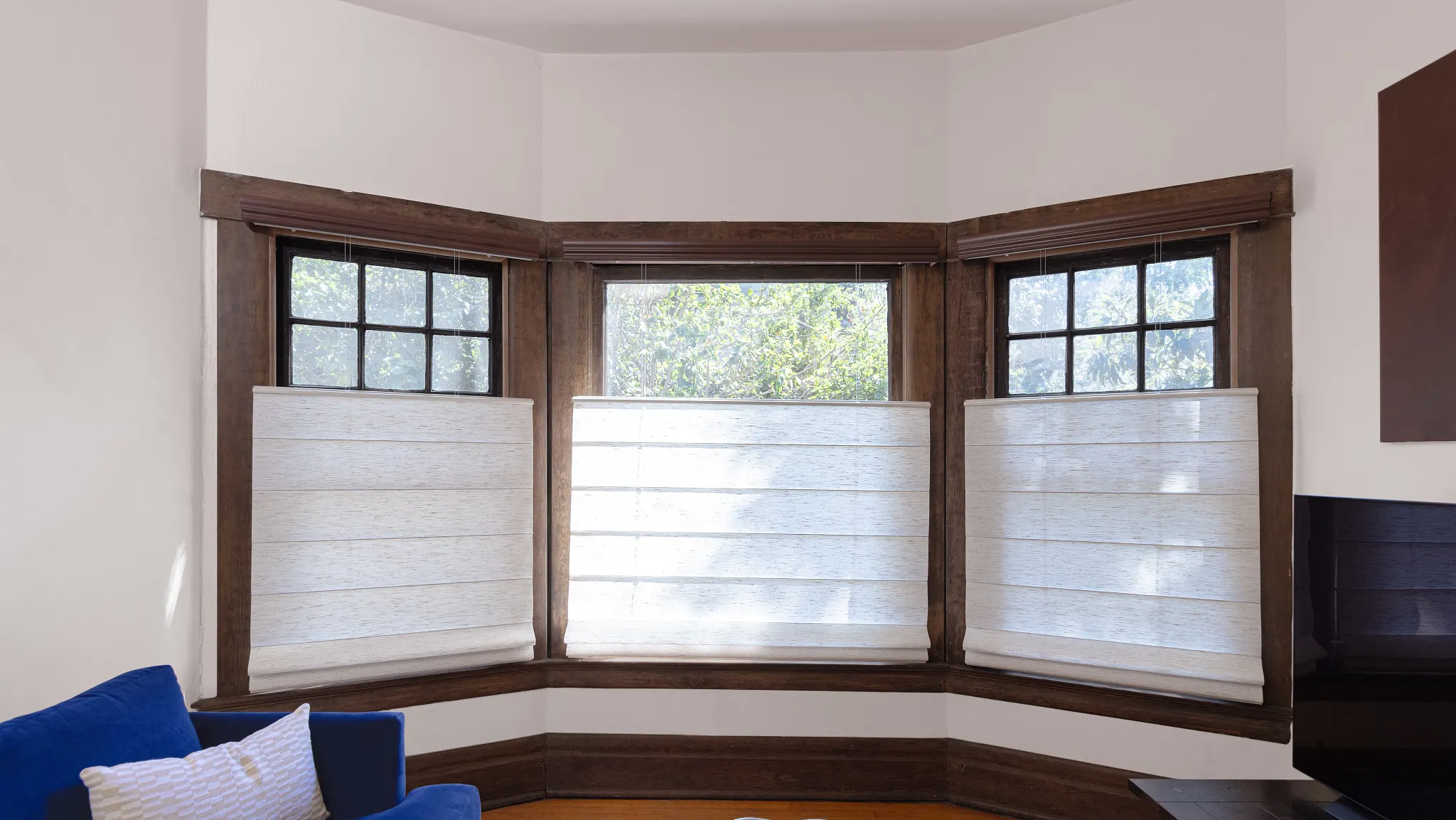
Bay windows consist of three distinct window panels that project outward from your home's exterior wall. Most configurations feature a larger, fixed picture window in the center with two smaller operable windows flanking each side. These side panels, typically casement or double-hung windows, angle away from the main wall at 30° or 45°. Knowing your specific bay window type helps you select appropriate bay window coverings that work with the unique angles and deliver both function and style.
Bay Window Styles
Bay windows add architectural interest and expanded views to homes. Here are the main styles:
• Angular Bay Windows: Feature 30-45 degree angles between panels. Depth ranges from 12-22 inches depending on angle. Clean lines work well in both contemporary and traditional designs.
• Bow Windows: Create a gentle, curved appearance with four or more equally sized panels arranged at slight angles (typically 10°). Provide panoramic views across nearly 180 degrees.
• Box Bay Windows: Position side panels at 90-degree angles to the center, creating a rectangular projection. Usually measure 18-24 inches deep. Popular in kitchens and breakfast nooks due to maximized floor space.
• Picture Windows in Bay Configurations: Feature a large, non-operable center panel for unobstructed views, with operable side windows for ventilation. The center window serves as the focal point for window treatments.
Custom Window Treatment Options
Choosing the right bay window coverings starts with understanding how different treatments work with these multi-paneled structures. Your room's function, style preferences, and practical needs will guide your selection.
Curtains and Drapery for Bay Windows
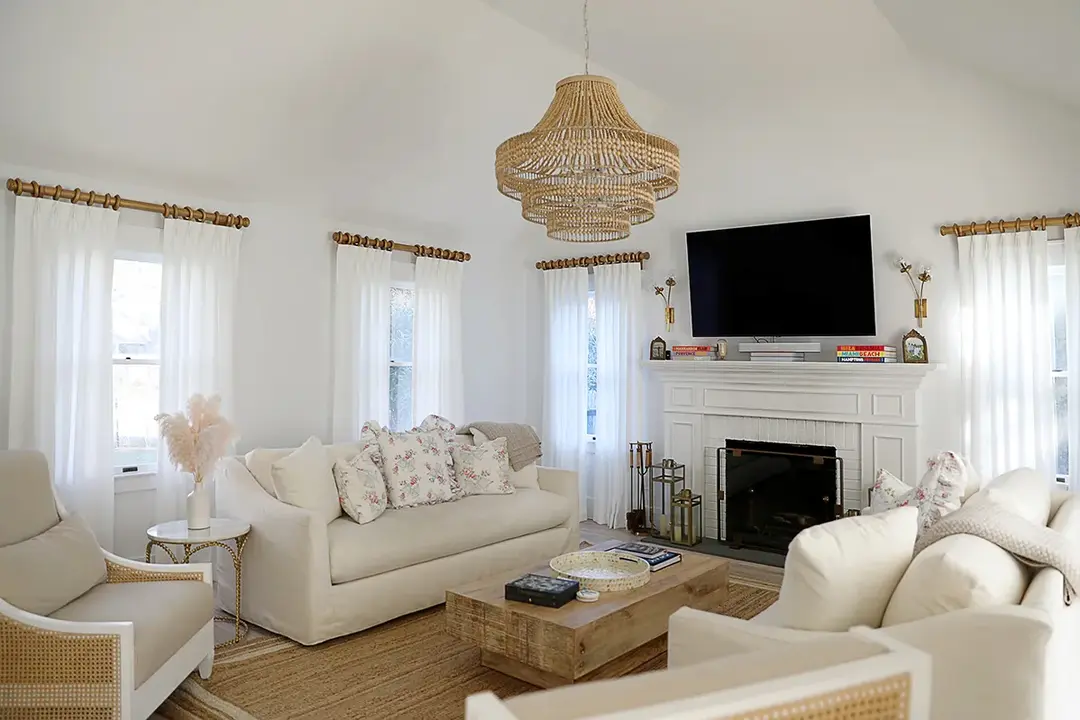
Drapery brings warmth and elegance to bay window installations. Fabric choices include cotton for easy care, velvet for rich texture, silk for formal spaces, and linen curtains for casual sophistication, each requiring different maintenance and offering distinct visual appeal
Pleat styles include classic Pinch Pleat Drapery featuring fan-like folds for a traditional look, Tailored Pleat offering a refined finish with pleats tacked at the top, or modern Inverted Pleat creating clean lines with pleats hidden inside the panel.
To learn more: Pinch Pleat Curtains & Drapes | Custom Designed by You
Lining makes a significant difference in performance. Privacy lining filters light while maintaining some brightness, blackout lining blocks light for better sleep, and interlining adds cotton flannel for improved insulation and fullness. Hardware options include traditional rod and ring combinations or sleek track systems for smooth operation.
Roman Shades
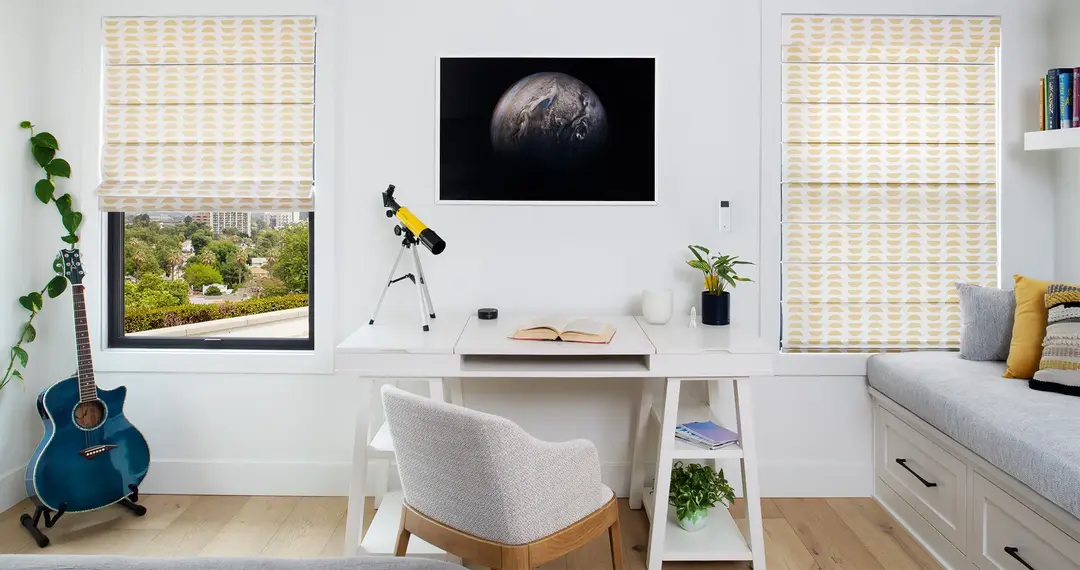
Roman Shades offer fabric warmth with the clean function of a collapsible shade. When raised, they fold into neat horizontal pleats. When lowered, they create a flat, tailored appearance. You can select from countless fabrics and patterns to match your decor, from casual linen to formal silk.
Inside mounting within each bay window frame delivers a built-in look that showcases window trim. For added style, pair Roman Shades with decorative side panels that frame the bay while adding layered texture.
Cellular and Honeycomb Shades
Cellular Shades work by trapping air in their honeycomb-shaped cells, creating natural insulation that blocks heat in summer and retains warmth in winter. This makes them the most energy-efficient window treatment you can choose.
Single-cell construction provides solid insulation with a streamlined profile. Double-cell adds a second honeycomb layer for maximum energy performance in extreme climates. Pleat sizes vary from compact 3/8" to 1/2" options that work well in smaller bay configurations, up to larger 3/4" to 1-1/4" pleats suited for standard and oversized windows. Quality double-cell Honeycomb Blinds can reduce heat loss through bay windows by 40% or more.
Shutters for Bay Windows
Shutters deliver classic sophistication with excellent light and privacy control. These durable treatments clean easily and can be custom-made to fit your bay window's unique angles and dimensions. Style options include full-height shutters for complete coverage, café style that covers just the lower portion for privacy while preserving views above, or tier-on-tier designs where top and bottom panels operate independently.
For precise measurements and professional installation, book a free in-home consultation with experienced specialists.
Blinds (Wood, Faux Wood, and Mini)
Wood Blinds bring refined elegance to bay windows with finishes ranging from painted neutrals to rich hardwood tones. For homeowners who want a similar look with added durability, Faux Wood Blinds offer the classic appearance of wood with better resistance to moisture and everyday wear, making them especially well suited for kitchens, bathrooms, and other high-humidity spaces.
Mini Blinds are a practical option for bay windows, especially when each panel is treated individually. Their slim profile helps them fit neatly within compact window sections, and 1" slats can reduce visible gaps where adjacent blinds meet. With durable materials and a wide range of customization options, Mini Blinds deliver a clean, functional look that works well in both casual and contemporary spaces.
Roller, Solar, and Sheer Window Shades
Roller Shades provide minimalist appeal with clean lines that highlight each window's architecture. Solar Shades block harmful UV rays while preserving light transmission, reducing glare and heat while protecting furniture from fading.
Sheer Shades filter sunlight gently, creating soft illumination that works beautifully in living rooms where you want bright, welcoming ambiance. Both solar and sheer options come in light-filtering and blackout fabrics for flexible light control throughout the day.
Choosing Bay Window Treatments by Style and Function
Matching your bay window treatments to both your aesthetic preferences and practical needs ensures you'll love the results for years to come.
Traditional and Classic Styles
Drapery Panels in velvet or linen fabrics create timeless sophistication, particularly when paired with wood blinds that bring warmth and natural elegance. Shutters add classic appeal with their clean lines and adjustable louvers, blending seamlessly with various interior styles while providing durability. These combinations work especially well in formal living rooms and dining areas where elegance matters.
Modern and Contemporary Looks
Mini Blinds deliver a sleeker aesthetic with industrial appeal suited for contemporary homes. Roller Shades offer minimalist design with streamlined functionality, while Solar Shades provide UV protection without sacrificing views. The clean lines complement modern architecture and work particularly well in kitchens and home offices.
Privacy and Light Control Options
Cafe Curtains covering only the lower window half allow natural light from above while maintaining privacy below. Layering Sheer Curtains with Shades gives you flexible control over both elements. This approach works beautifully in living rooms, dining areas, and master bedrooms where bay windows create charming focal points while offering varying levels of natural light throughout the day.
Blackout Solutions for Bedrooms
Blackout panels custom-fitted to each bay window section block all external light while adding insulation. Blackout roller shades and blackout-lined Roman shades provide complete room darkening for quality sleep. These solutions prove essential in bedrooms and nurseries where controlling morning light supports better rest.
Top-Down Bottom-Up Functionality
This dual-operation feature lets you lower shades from the top or raise from the bottom independently, achieving privacy while accessing natural light simultaneously. It's particularly useful in bay windows with seating areas, where you want privacy at eye level while maintaining brightness above.
Motorized and Smart Window Treatments
Motorized window treatments have moved well beyond a luxury add-on. For bay windows in particular, they solve real practical problems. Reaching across a deep window seat to adjust three separate panels, or stretching to operate a blind in a hard-to-reach corner, gets old quickly. Motorization eliminates that friction entirely.
How They Work
Most motorized treatments are powered either by a rechargeable battery pack or a hardwired connection. Battery-powered options are easier to install since they require no electrical work, though you'll need to recharge or replace batteries periodically. Hardwired systems are more seamless long-term and are worth considering if you're already doing a renovation.
Operation is typically handled through a handheld remote, a wall switch, or a smartphone app, and increasingly, through voice commands.
Smart Home Integration
Many motorized treatments are compatible with popular smart home platforms including Amazon Alexa, Google Home, and Apple HomeKit, allowing you to control your shades through voice commands or automated schedules. This means you can program your bay window treatments to:
- Open gradually in the morning to wake naturally with light
- Close automatically at sunset for privacy
- Adjust throughout the day based on sun position to manage heat and glare
This kind of scheduling is especially valuable for bay windows that face east or west, where sunlight intensity shifts dramatically throughout the day.
Why It Makes Sense for Bay Windows Specifically
Bay windows often involve three or more individual treatments operating side by side. Without motorization, adjusting each panel separately becomes a daily chore. With a single tap or voice command, all panels move in unison, a significant quality-of-life improvement that also creates a cleaner, more coordinated look.
They're also ideal for bay windows above window seats, where reaching the controls manually can be awkward, and for two-story rooms where windows sit higher than arm's reach.
Things to Consider
- Motorization is available across most treatment types. Currently, Roller Shades, Cellular Shades, Roman Shades, and drapery systems all have motorized options
- Factor in the added cost upfront, but weigh it against the convenience and potential energy savings from automated scheduling
- If you're not ready to commit fully, consider motorizing just the center panel of your bay, which typically gets the most use
Installation Considerations and Practical Tips
Getting your bay window treatments installed correctly makes the difference between a professional result and a disappointing outcome. The unique angles and projection of these windows require specific mounting strategies and hardware solutions.
Inside Mount vs Outside Mount
Inside mount positions treatments within the window frame, creating a clean, built-in appearance that showcases decorative trim. Your window recess needs at least 2 inches of depth to accommodate blinds without awkward protrusion. Outside mount attaches treatments to the wall or ceiling surrounding the window, making windows appear larger and working better when inside depth is limited. Outside mounting provides maximum coverage and works well for continuous treatments across multiple panels.
Individual Panels vs Continuous Treatments
Individual panels mean one treatment covers each window section, accommodating different angles and allowing independent operation. This approach works particularly well for picture windows and curved bow configurations. Continuous treatments span multiple windows for a unified, streamlined look with easier one-touch operation, though they're not suitable for sharply angled bays.
Working with Curved and Angled Windows
Standard straight tracks or rods don’t fit bay window angles. Angled brackets provide secure mounting where each panel meets. With a 3 Day Blinds in-home consultation, a Design Consultant will take precise measurements and custom order treatments to fit your exact space.
How 3 Day Blinds Helps with Installation
Bay Window Treatments: What to Expect Budget-Wise
Bay windows require more material and often more complex installation than standard windows, so budget is an important part of the planning process.
At the more affordable end, Roller Shades and Mini Blinds are often practical choices for covering a large bay window without a major investment
Mid-range options like Cellular Shades, Roman Shades, and Faux Wood Blinds offer a step up in both aesthetics and performance. Cellular Shades in particular can offset their higher cost over time through energy savings, making them a smart investment for drafty bay windows.
At the premium end, Shutters and custom Drapery tend to carry the highest upfront cost. Shutters are custom-built to your exact window dimensions and can last decades, making them a long-term investment rather than a recurring expense. Custom Drapery adds similar lasting value, especially when made with high-quality fabrics and lining.
A few things that can affect cost regardless of treatment type:
- Motorization adds cost to almost any treatment but significantly improves usability for hard-to-reach windows
- Custom sizing for unusually angled or oversized bay windows may cost more than standard sizes
- Professional installation For many homeowners, professional measuring and installation are worth considering for bay windows, since a precise fit can help treatments look better and function more smoothly over time
Conclusion
Bay windows add architectural beauty to your home, and the right treatments enhance both their form and function. Whether you prefer traditional drapery, modern roller shades, or energy-efficient cellular options, your choice should balance esthetics with practical needs like light control and privacy.
Because bay windows often involve angled frames, multiple panels, and specialized hardware, professional measuring and installation can help take the guesswork out of the process. With 3 Day Blinds, you can get expert guidance, custom-fit solutions, and professional installation designed for your unique space.
Ready to get started? Book your Free In-Home Appointment and let 3 Day Blinds help you find the right fit for your bay windows.

.png?Status=Master&sfvrsn=837b23bd_1)
.png?Status=Master&sfvrsn=f55daebb_1)