

.png?Status=Master&sfvrsn=4c04cf13_1)
.png?Status=Master&sfvrsn=d5947d95_1)
.png?Status=Master&sfvrsn=2b1efdd1_1)
Quick Answer: Choose Light Filtering fabrics for spaces where you want abundant natural light with good daytime privacy (living rooms, dining rooms, home offices). Choose Room Dimming fabrics for spaces requiring enhanced privacy and significant light control (bedrooms, bathrooms, media rooms). Your room’s function, window orientation, proximity to neighbors, and personal light sensitivity determine the ideal opacity.
You’ve decided on Horizontal Sheer Shades for your windows. Now comes one of the most important decisions: fabric opacity. Two opacity levels are available: Light Filtering and Room Dimming.
This choice affects everything: how much light enters your space, your privacy level, how your room feels throughout the day, and even your sleep quality in bedrooms. Let’s walk through exactly how to make this decision with confidence.
Understanding Fabric Opacity: What It Actually Means
Fabric opacity refers to how much light can pass through your Horizontal Sheer Shade fabric when the vanes are closed. Think of it as a spectrum:
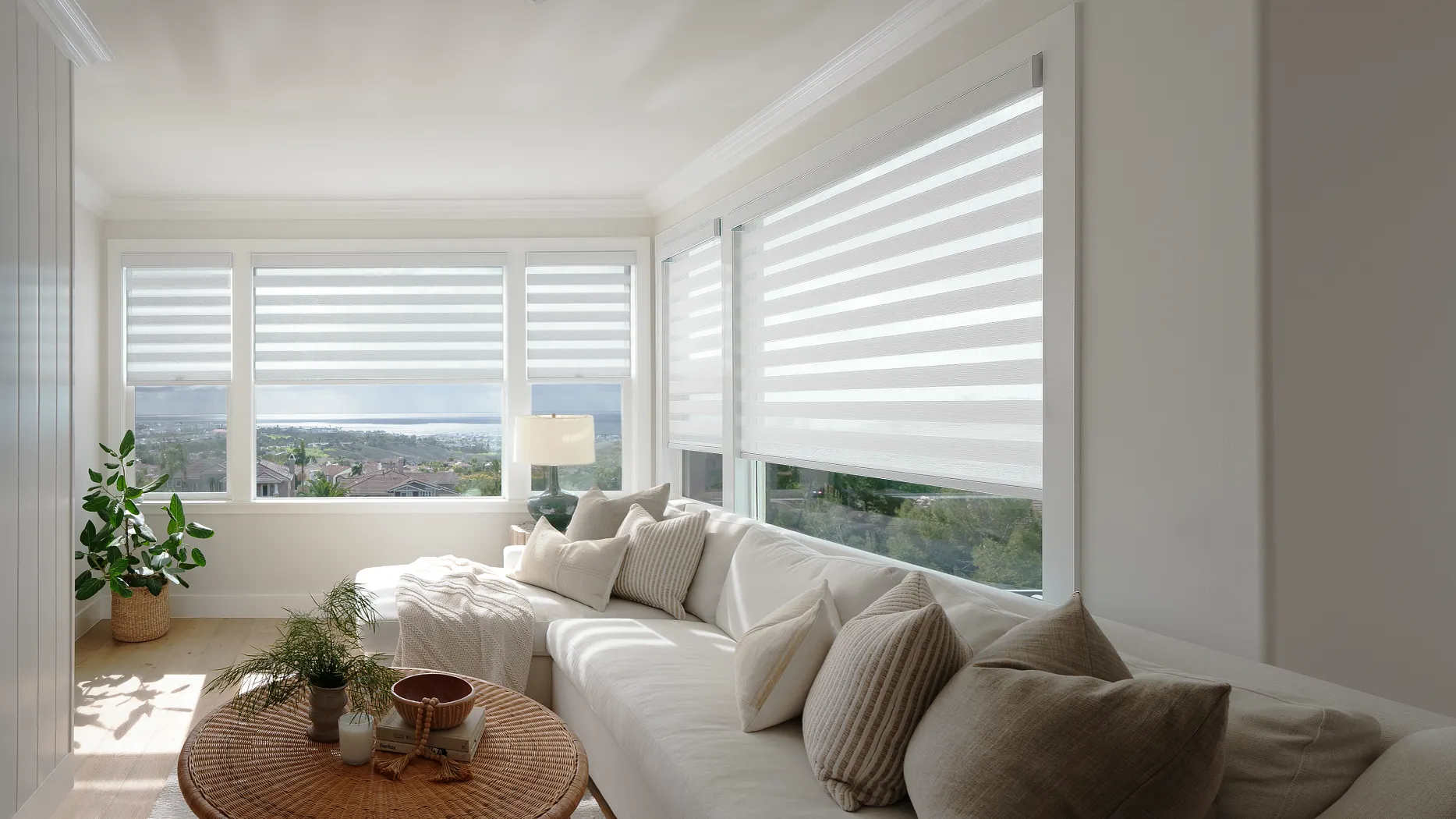
Light Filtering: Allows diffused natural light to pass through while reducing glare and providing privacy. You’ll have a bright, airy space with softened light, similar to a cloudy day’s gentle illumination.
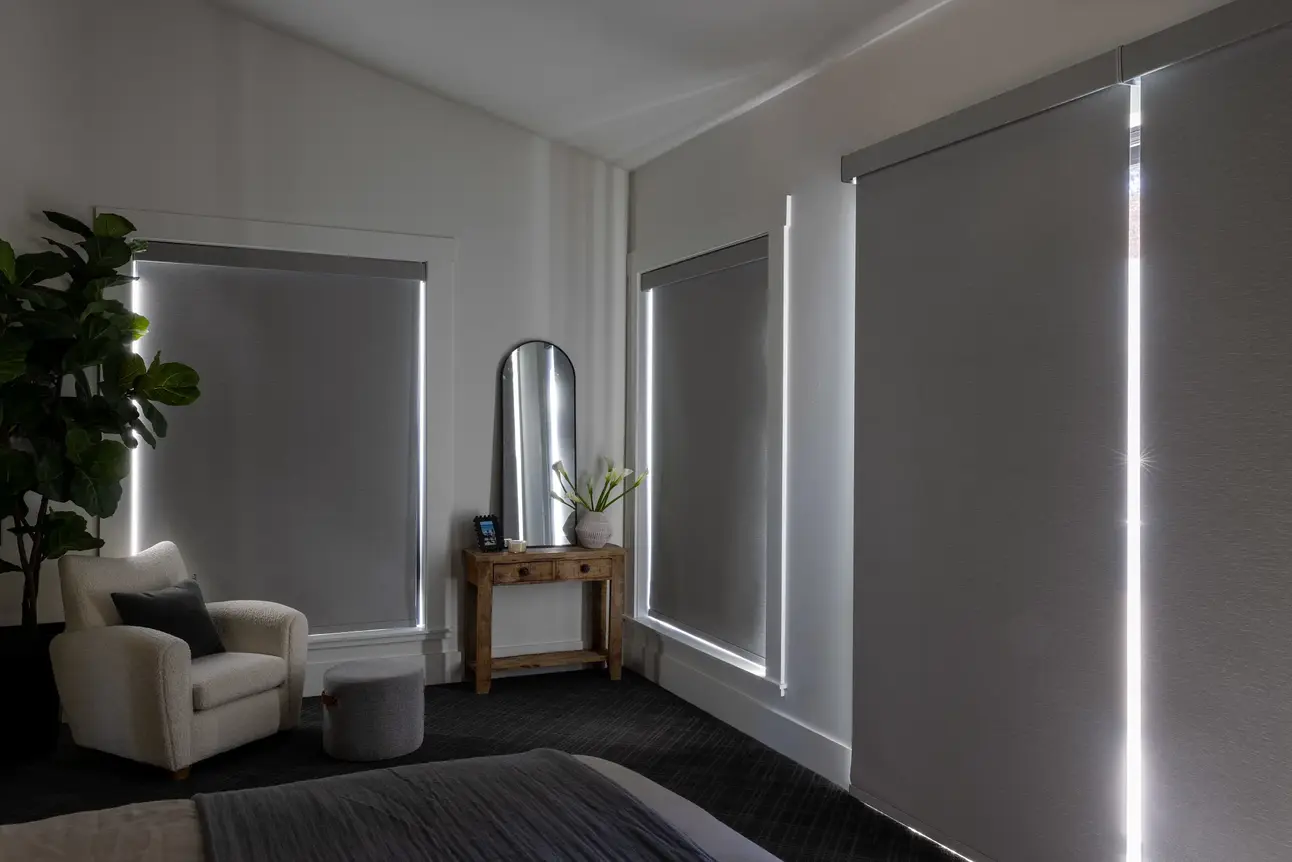
Room Dimming: Significantly reduces light transmission, creating a more controlled, darker environment. Light still filters through but at substantially reduced levels. Think early twilight rather than midday brightness.
“What surprises clients during consultations is how different these two options feel in person, Photos online can’t capture it. When I hold Light Filtering and Room Dimming samples side-by-side in their actual window with their actual light, the difference becomes immediately clear, and suddenly the decision is easy.”
Neither option is “better” universally. It depends entirely on your specific needs for each room.
To learn more about Room Darkening Shades please read: Blackout vs Room Darkening
Light Filtering Fabrics: When Brightness and Ambiance Matter Most
What You’ll Experience
During the Day (Vanes Closed):
Abundant diffused natural light fills your space
Harsh glare is softened and filtered
Colors appear warm and natural
You can see general outdoor shapes and movement
Privacy is good. People outside see shadows and shapes but no detail
At Night (Vanes Closed, Lights On):
Soft ambient light from your space glows through the fabric
Very good privacy from 15+ feet away
Room feels connected to the outside world rather than shut off
Light Level: You’ll maintain approximately 40-60% of full daylight when vanes are closed. It’s bright enough to read, work, and go about activities comfortably without additional artificial lighting during daytime.
Ideal Spaces for Light Filtering Fabrics
Living Rooms
Living rooms thrive with natural light. Light-filtering fabrics create that warm, inviting atmosphere perfect for family time, entertaining, and daily living. You’ll reduce TV screen glare while maintaining brightness and connection to your outdoor views.
Read about additional: Living Room Window Treatments
Dining Rooms
Natural light makes dining experiences more enjoyable and makes food look more appealing. Light Filtering fabrics provide the brightness you want during meals while offering adequate privacy from neighbors or street traffic.
Home Offices
Working from home requires careful light management. Light Filtering fabrics reduce computer screen glare and harsh shadows while maintaining the natural light that research shows boosts productivity, focus, and mood. During video calls, closed vanes eliminate backlighting and silhouetting.
Kitchens
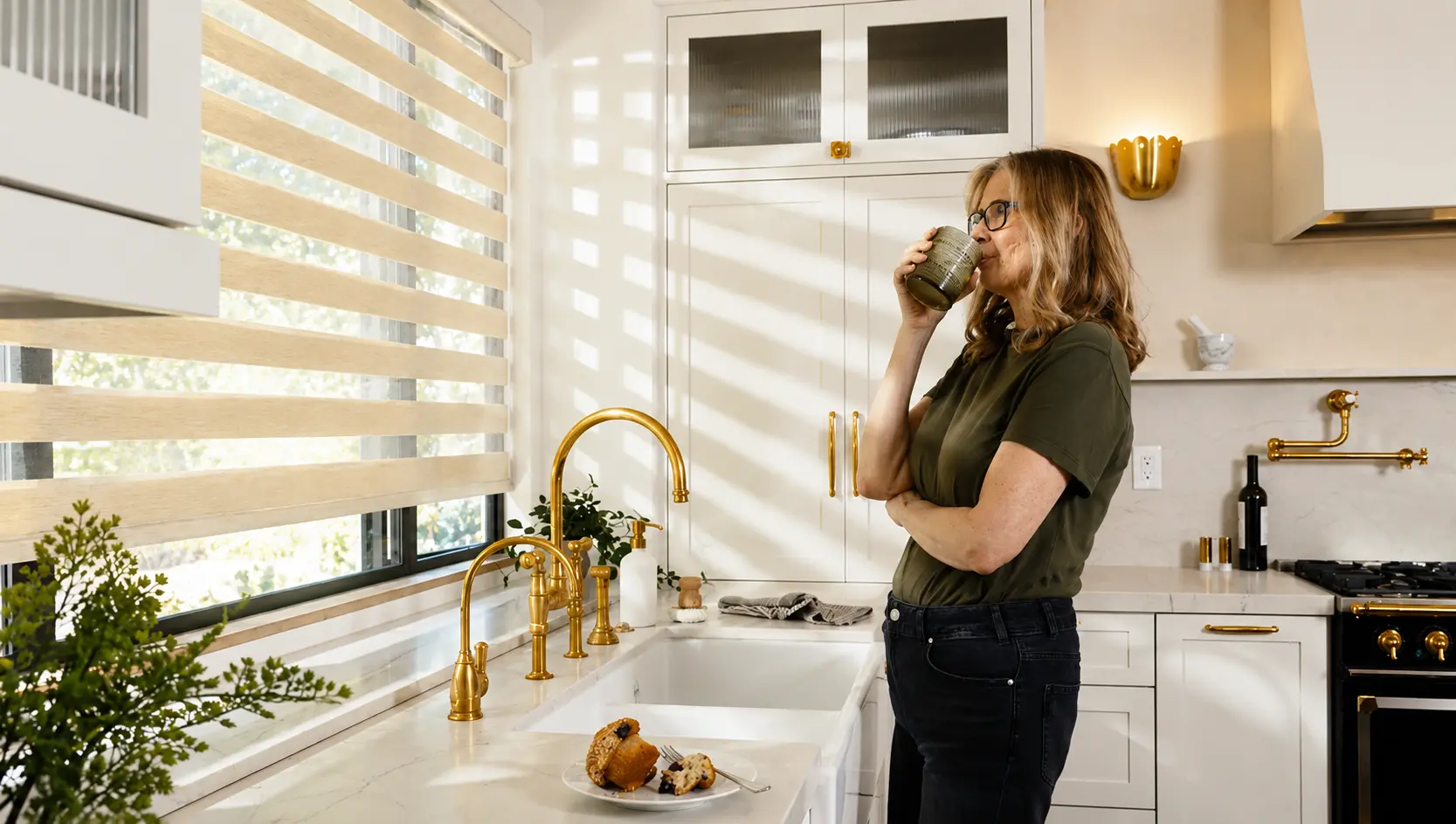
Food preparation benefits from abundant natural light. Light Filtering fabrics keep your kitchen bright and cheerful while providing privacy without creating a cave-like feeling.
Sunrooms and Great Rooms
Spaces designed to celebrate natural light need Light Filtering fabrics. You’ll enjoy your views and brightness while controlling glare and UV exposure that can fade furniture and flooring.
When Light Filtering Might Not Be Enough
Consider Room Dimming instead if:
Your windows face west (intense afternoon sun creates heat and glare)
You work night shifts and sleep during the day
You’re sensitive to light when sleeping
Your windows are very close to neighbors (within 15 feet)
The room functions as a bedroom or media room
Room Dimming Fabrics: When Control and Privacy Are Priorities
What You’ll Experience
During the Day (Vanes Closed):
Significantly reduced light transmission (approximately 15-30% of full daylight)
Dramatic reduction in glare and heat gain
Enhanced privacy. Minimal interior detail visible from outside
Soft, filtered light rather than darkness
Room feels more controlled and intimate
At Night (Vanes Closed, Lights On):
Excellent privacy from any distance
Minimal light transmission through the fabric
Room feels secure and private
Important distinction: Room Dimming is not the same as blackout. Room Dimming fabrics still allow some filtered light through. You won’t achieve complete darkness. But light levels are significantly reduced compared to Light Filtering options.
Click here to learn more about: Blackout vs Room Darkening
Ideal Spaces for Room Dimming Fabrics
Bedrooms
Sleep quality depends heavily on light control. Room Dimming fabrics significantly reduce early morning sunlight, helping you sleep later without complete darkness. They provide excellent nighttime privacy and create that cozy, restful atmosphere conducive to relaxation.
“For bedrooms, I recommend Room Dimming fabrics almost without exception. Clients tell me their sleep improved because they’re not woken by early sunrise. You still get soft light during the day when vanes are open, but the control is there when you need it.”
Media Rooms and Home Theaters
Watching movies or gaming requires significant light control to reduce screen glare and create that immersive experience. Room Dimming fabrics dramatically reduce ambient light without requiring complete blackout.
Bathrooms
Privacy is paramount in bathrooms, especially ground-floor installations. Room Dimming fabrics provide the enhanced privacy you need while still allowing enough diffused light to avoid a dark, closed-in feeling.
West-Facing Windows
If your windows face west, you’re dealing with intense afternoon sun that creates heat gain and harsh glare. Room Dimming fabrics significantly reduce both issues, making your space more comfortable while protecting furniture and flooring from UV damage.
Street-Facing or Close-Neighbor Windows
When your windows are within 15 feet of public sidewalks or neighbors’ windows, Room Dimming fabrics provide the enhanced privacy level that creates peace of mind.
When Room Dimming Might Be Too Much
Consider Light Filtering instead if:
You need maximum natural light for activities (cooking, reading, crafts)
The space feels dark or cave-like already
Privacy concerns are minimal (second floor, rural setting)
You want bright, energizing spaces during the day
The Technical Specifications: Understanding UV Protection
Both Light Filtering and Room Dimming fabrics offer substantial UV protection:
Light Filtering Fabrics:
Block 87% of UV rays when vanes are open
Block 99% of UV rays when vanes are closed
Room Dimming Fabrics:
Block 88% of UV rays when vanes are open
Block 99% of UV rays when vanes are closed
This means both options provide excellent protection for your furniture, flooring, and artwork from sun damage. The primary difference is visible light transmission and privacy level, not UV protection.
Window Orientation: How Direction Affects Your Choice
The direction your windows face significantly impacts which fabric opacity works best:
North-Facing Windows
Light characteristics: Consistent, soft, indirect light throughout the day. Never gets harsh direct sunlight.
Recommendation: Light Filtering fabrics work beautifully. You’ll maximize the gentle northern light without needing significant reduction.
Best for: Home offices, art studios, living rooms
South-Facing Windows
Light characteristics: Abundant direct sunlight for most of the day. Can create heat gain and glare.
Recommendation: Either opacity can work, depending on room function. Light Filtering for living spaces where you want brightness, Room Dimming for bedrooms or if heat gain is a concern.
Best for: Versatile, assess based on room use
East-Facing Windows
Light characteristics: Bright morning sun that can be intense but tapers off by afternoon.
Recommendation: For bedrooms where morning sun might wake you earlier than desired, Room Dimming fabrics help you sleep later. For living spaces, Light Filtering works well.
Best for: Consider your morning
West-Facing Windows
Light characteristics: Strong afternoon and evening sun, often the harshest light of the day. West-facing windows can create glare, heat buildup, UV exposure, and uncomfortable brightness in late-day living spaces.
Recommendation: Room Dimming fabrics are often the better choice for west-facing bedrooms, media rooms, and rooms that overheat in the afternoon. Light Filtering fabrics can still work well in living rooms or dining rooms where you want to soften the sun without making the space feel too dark.
Best for: Living rooms, bedrooms, media rooms, dining rooms, and any space affected by late-afternoon glare or heat.
Find the Right Horizontal Sheer Shades for Your Space
Choosing between Light Filtering and Room Dimming fabric comes down to how you use the room, how much natural light enters the window, and the level of privacy you need. Light Filtering fabrics help keep living spaces bright and welcoming, while Room Dimming fabrics provide greater light control and privacy for bedrooms, bathrooms, media rooms, and windows exposed to intense sunlight.
Because fabric opacity can look different depending on your home’s lighting and window orientation, seeing the options in your space can make the decision much easier. During a free in-home consultation, a 3 Day Blinds Design Consultant will bring fabric samples to your home, compare them in your actual windows, and help you select the right Horizontal Sheer Shades for each room.
Schedule your FREE In-Home Consultation Today and discover the right balance of natural light, privacy, and comfort for your home.
.png?Status=Master&sfvrsn=837b23bd_1)
.png?Status=Master&sfvrsn=f55daebb_1)