


Key Takeaways
● The right material depends on the space, how much sun you want to let in, your privacy needs, and your style.
● Natural fibers bring texture and versatility, while polyester and performance blends stand up to busy households.
● Darkening materials suit bedrooms and media spaces. Filtering weaves suit living areas, kitchens, and offices.
● A liner changes privacy, insulation, and how the shade hangs.
● Judge samples at your own windows before you decide.
What Is the Best Fabric for Custom Roman Shades?
The best fabric for Roman Shades balances sun control, privacy, durability, and style for the space it covers. Natural fibers are prized for texture and versatility, and performance blends for easy care in busy households.
Fabric Roman Shades, also called Roman blinds, fold into neat horizontal pleats as they rise. The material has to hold a crease without feeling stiff, which is why medium-weight decor fabric tends to fold more crisply than very thin cloth.
Color gets most of the attention, but the material decides how Roman window shades perform over time: how much glare they cut, how private the space feels at night, and how well they hold up to sun and everyday handling.
| Material | Best For | Privacy | Care | Style |
|---|---|---|---|---|
| Linen | Living spaces, bedrooms | Medium | Moderate | Coastal, casual, transitional |
| Cotton and blends | Most spaces | Medium | Easy | Traditional, tailored |
| Polyester | Kitchens, family spaces | Medium-high | Easy | Versatile |
| Performance blends | Households with kids and pets | High | Very easy | Contemporary, family-friendly |
| Darkening weaves | Bedrooms, media spaces | High | Easy | Any style |
Compare common materials by privacy, care, and best use.
Matching Material to the Room
Bedrooms and Media Rooms
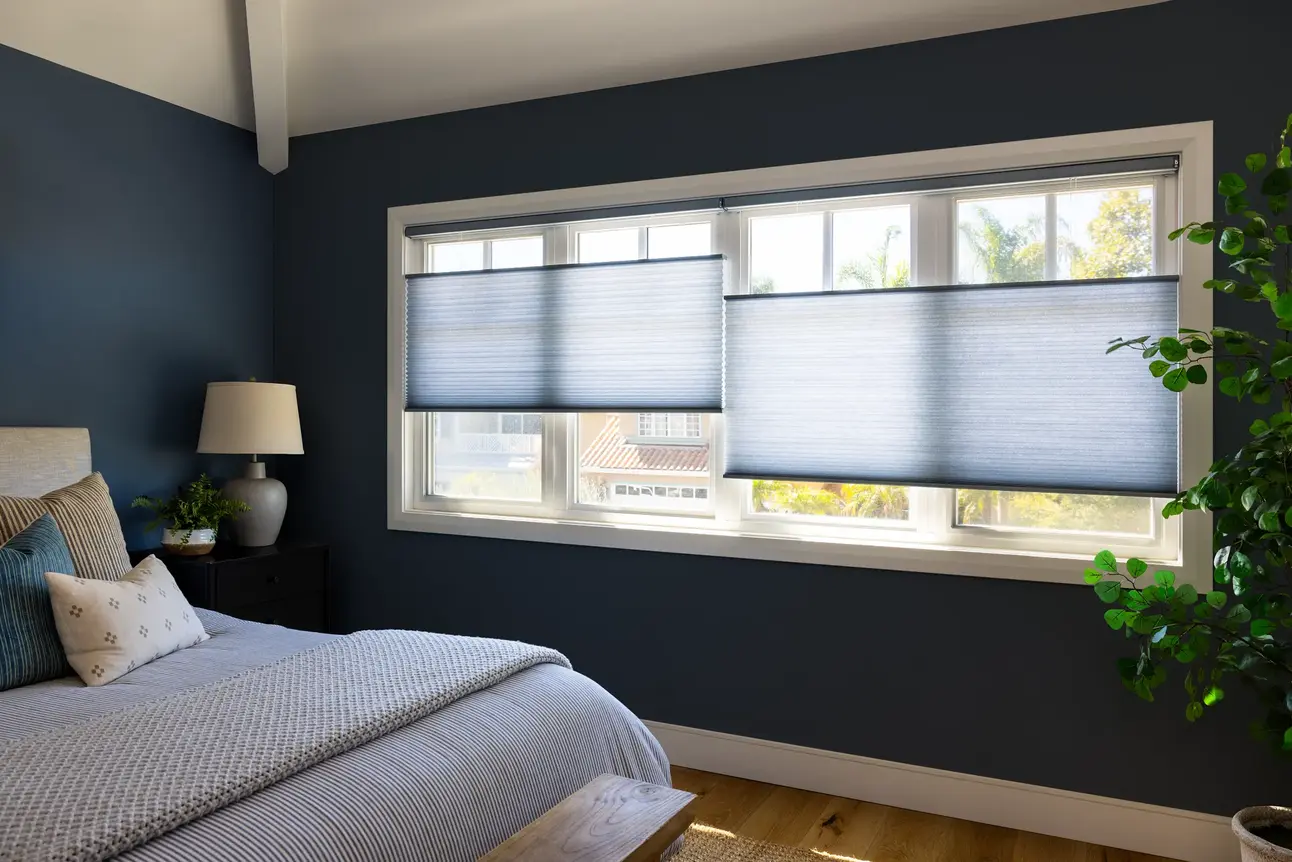
Look for a room-darkening fabric, a heavier weave, or any material paired with a darkening liner. Each creates a darker, more restful space while keeping the tailored look of a Roman Shade. For the difference between darkening and full blackout, see how blackout compares with darkening options
White Roman Shades paired with floor-length ivory Drapery in a bright, neutral bedroom
Living and Dining Rooms
These spaces need a balance of daylight and privacy. Natural fibers, soft blends, and textured filtering weaves soften the sun while keeping the space bright and inviting. Layering drapery over the shade adds warmth and evening privacy; see our guide to layering a shade with curtains
Linen Tweed - Natural ,Top-Down Bottom-Up Roman Shades in a traditional dining room.
Kitchens
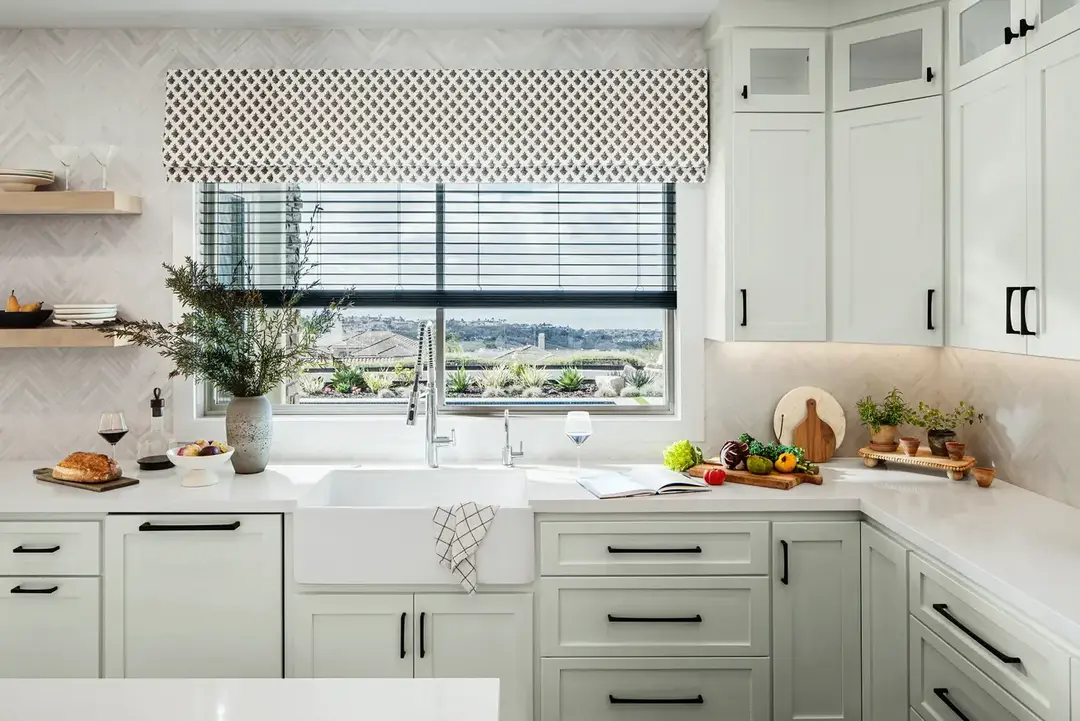
Choose durable, easy-care materials such as polyester or performance blends in a filtering opacity. They resist everyday wear and let daylight through. Find more ideas in our guide to kitchen window treatments.

Natural tan Roman Shade partially lowered over a wide kitchen window.
Bathrooms
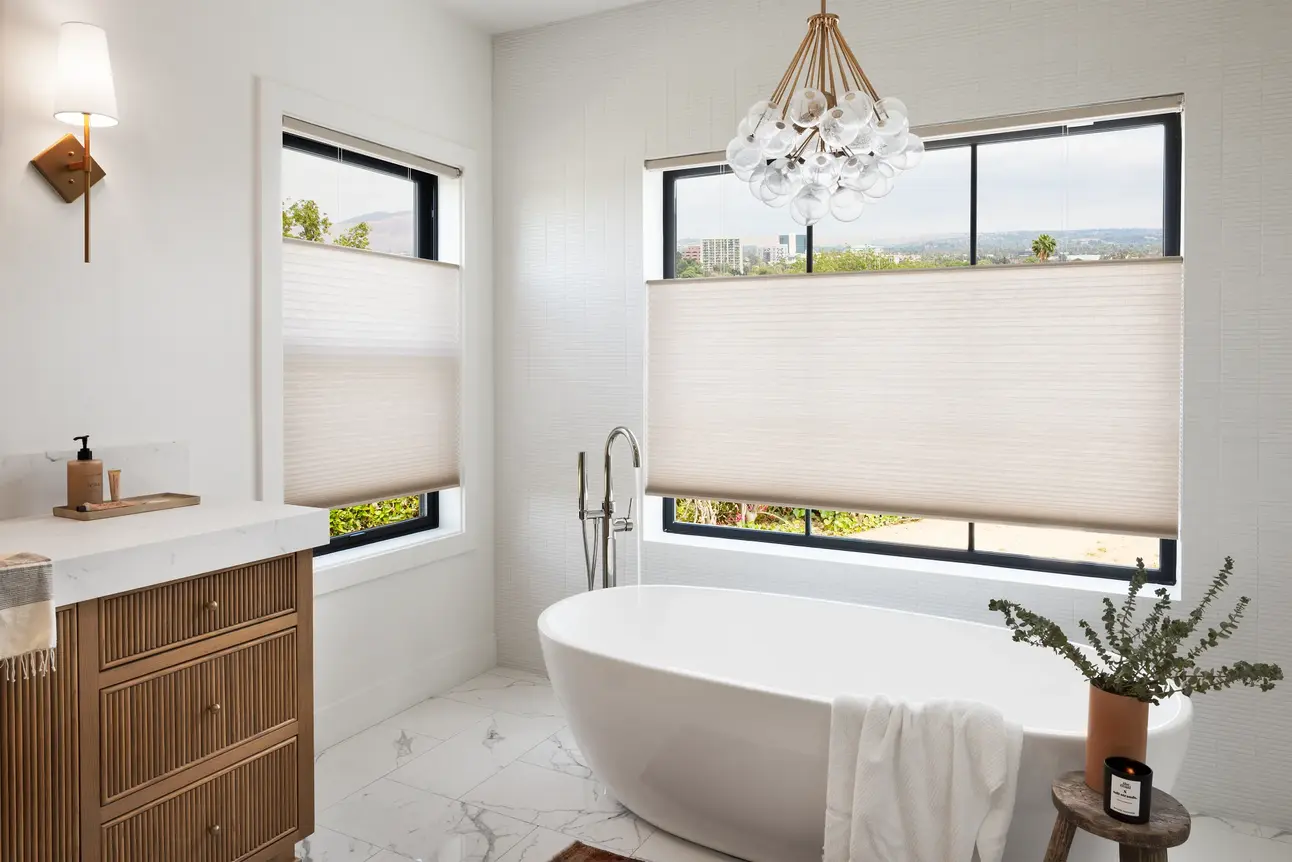
Bathrooms call for privacy first and moisture tolerance second. Polyester and performance blends handle humidity better than natural fibers, and a privacy liner keeps silhouettes hidden after dark. A top-down, bottom-up lift lets you lower the top edge for daylight while the bottom stays closed.

Light gray Roman Shade partially raised above a freestanding white bathtub in a modern bathroom.
Home Offices
Offices need glare control without a dim workspace. Filtering weaves, textured materials, and semi-sheer options cut harsh sun on screens while keeping working conditions comfortable.

Blue and white geometric patterned Roman Shades cover two windows in a bright home office.
The Most Popular Materials
Natural Fibers
Woven from flax, natural linen is one of the most requested materials for its organic texture and relaxed elegance. It works with casual, coastal, transitional, and contemporary interiors. It’s character shows best on Flat and Relaxed styles.
Cotton, pure or blended, works in nearly any space. It offers a clean finish, a wide range of colors and prints, and soft, structured folds that suit Classic and Flat styles. If you prefer low-impact textiles, ask your design consultant about organic cotton options. For definitions of weaves like jacquard, twill, and herringbone, see our window treatment glossary.
Modern Performance Blends
Synthetic and performance materials keep growing in popularity because they resist fading, make cleaning easy, and hold up in busy households with kids and pets. They work with every fold style. Pair them with a cordless lift for a safer setup in family spaces.
Bold Patterns on a Single Panel
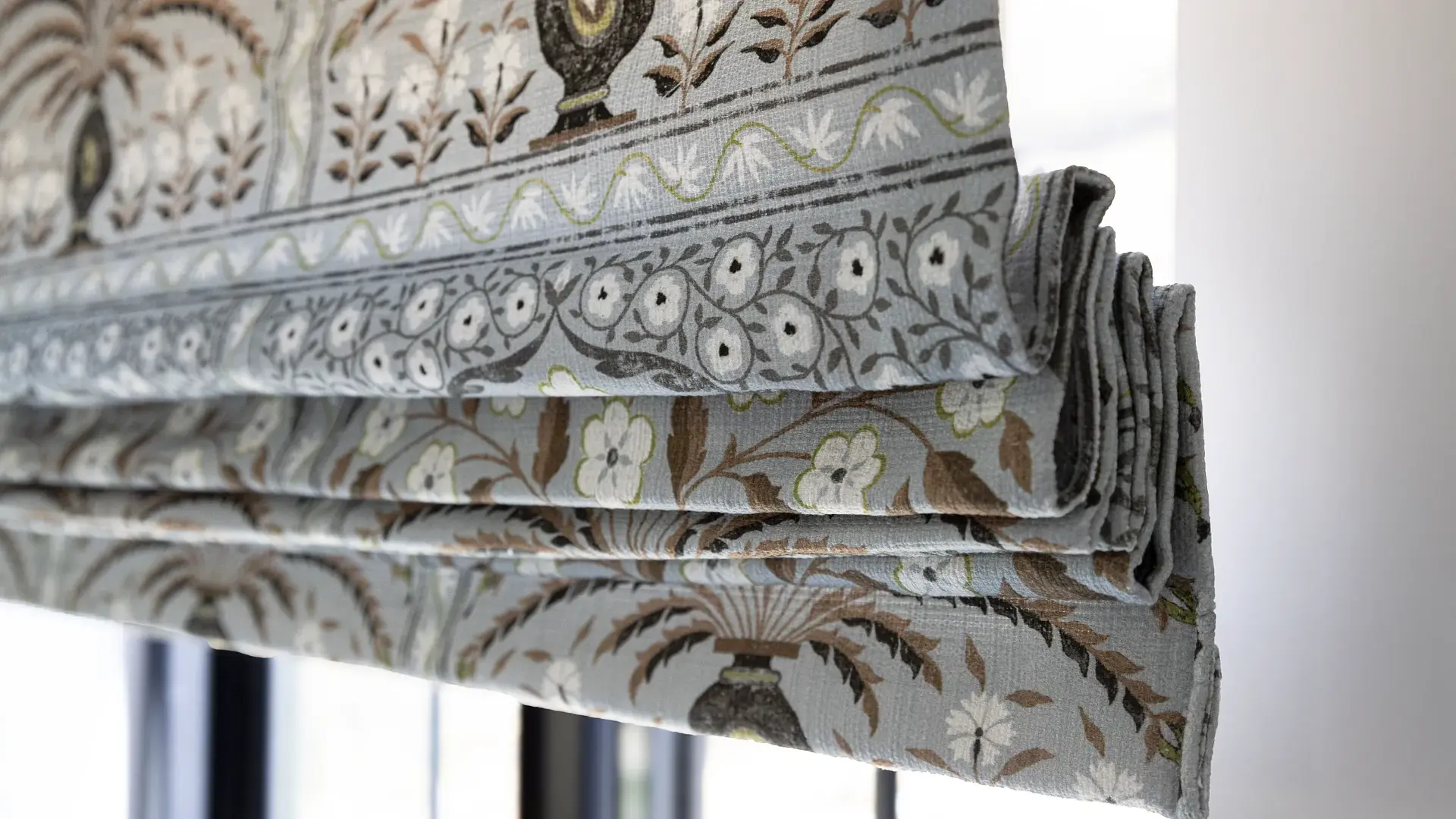
Woven textures, geometric motifs, and organic prints turn a shade into a focal point. A patterned Roman shade shows best in the Flat style, where an uninterrupted surface displays the full repeat.
Weight and Weave
Two materials in the same color can behave very differently at the window. Weight and weave decide how crisply the folds stack, how much glow passes through, and how the panel hangs when lowered.
Lightweight weaves feel airy but can sag between folds. Medium-weight materials are the sweet spot for most styles: they hold a sharp pleat, drape without stiffness, and work with or without a liner. Heavyweight weaves, such as velvet, chenille, and dense wool blends, add insulation and a rich, formal look. They stack thicker at the top of the window, so they suit taller openings with space above the frame.
Weave matters as much as weight. A tight, flat weave blocks more glare and gives prints a clean edge. An open or slubbed weave lets texture show and filters daylight more softly. When you compare samples, hold each one up to a bright window and look at the back as well as the face. That view shows how evenly the color and texture will read once installed.
Light Control: Filtering vs. Darkening
Opacity matters as much as fiber. Filtering materials diffuse the sun while keeping a space bright. They reduce glare, add daytime privacy, help protect furnishings from UV, and suit living areas, kitchens, offices, and dining spaces.
Darkening materials block more sun and add privacy for bedrooms, nurseries, media spaces, and guest suites. For a full rundown, read about the benefits of darkening shades.
How the shade is installed matters too. An outside mount overlaps the window frame and reduces the gaps where sun slips in, while an inside mount gives a cleaner, built-in look. A precise custom size also limits edge gaps. Our measuring and installation guides explain both options.
Window Direction and Sun Exposure
The way a window faces changes what the material has to do. South- and west-facing windows take the strongest afternoon sun, so they need fade-resistant blends or a protective liner, and they benefit most from a darkening or thermal layer in summer. East-facing windows get bright, early sun, which matters in bedrooms where an early wake-up isn't welcome. North-facing windows get soft, even daylight all day, so they're the safest place for delicate natural fibers, silks, and deep colors that would fade elsewhere.
Color shifts with exposure too. Warm neutrals glow in afternoon sun, while cool grays can read flat in north-facing spaces. A white or ivory face reflects heat and keeps the street view uniform.
Why the Liner Matters
The liner is the lining fabric sewn behind the face material. It changes privacy, sun control, insulation, and how fully the shade hangs.
| Liner | Best For | Key Benefits |
|---|---|---|
| Light-Filtering | Living, dining, kitchens | Softens sun while protecting the face material |
| Premium Light-Filtering | Living areas and offices | Adds body, insulation, and a fuller look |
| Room-Darkening | Bedrooms and media spaces | More privacy and sun control |
| Thermal | Energy-conscious households | Helps improve insulation and comfort |
| Interlining | Formal and luxury spaces | Adds fullness, insulation, and a refined drape |
Pairing the right face material with the right liner creates the ideal balance of beauty and function. Thermal and darkening liners also add insulation; see how liners affect energy efficiency.
The liner also changes how the window looks from outside. Because it faces the street, a neutral liner gives every window the same clean appearance, even when each space uses a different face material. Interlining is a soft flannel layer sewn between the face and the liner. It adds body to thin silks and luxury weaves, softens the folds, and adds an extra layer of insulation, which is why it shows up most in formal living and dining spaces.
Pairing Material with Your Roman Shade Style
Some materials flatter certain fold styles more than others. Soft Roman Shades come in several silhouettes, and our comparison of hobbled and flat styles shows two of the most popular side by side.
| Style | Recommended Materials | Why It Works |
|---|---|---|
| Flat | Natural fibers, textured weaves, bold prints | A single smooth panel lets pattern and texture become the focal point |
| Classic | Woven blends, solids, structured weaves | Holds clean, uniform folds for a tailored look |
| Relaxed | Natural fibers, soft weaves, casual textures | Enhances the gentle drape at the center |
| Hobbled | Medium-weight and traditional weaves, textures | Emphasizes cascading folds that stay visible when lowered |
Mistakes to Avoid When Ordering Roman Blinds
● Choosing by color alone
● Ignoring privacy needs
● Skipping the liner
● Putting delicate materials in high-traffic spaces
● Forgetting how sun changes a color through the day
● Pairing a material with a style it doesn't flatter
Design Consultant Tip: Start with the space's main purpose. Bedrooms benefit from thicker materials and liners, while living rooms perform best with thinner fabric that keeps daylight and cuts glare. - Tony Mogavero, 3 Day Blinds Design Consultant.
Shade Care and Upkeep
Most of these materials need little upkeep to stay looking new. Vacuum the folds every few weeks with a soft brush attachment to keep dust from settling into the pleats. Spot-treat marks with a damp cloth and mild soap, blotting instead of rubbing, and test a hidden corner first. Silks, velvets, and heavily lined pieces are best left to a professional cleaner. Raising the shade fully on long, sunny days limits fading on the face. For step-by-step care by product, see our guide to caring for window coverings.
See Samples in Your Own Light
Swatches often look different online than they do at your windows. Wall color, furnishings, and the direction your windows face all change how a texture reads, and a crisp white can look warm or cool depending on the hour.
The best choice fits how each space is used, your privacy needs, and your style: natural fibers for texture, blends for versatility, performance weaves for durability, and darkening options where sleep matters. A 3 Day Blinds design consultant brings more than 150 designer fabrics to you, so you can compare texture, opacity, and color side by side, then measure for a precise fit on your custom Roman Shades.